Project on Swedish policies on “deadbeat dads,” which Rivera undertook after earning his BA at Brown University and before attending Stanford Law School.

This final of twelve portraits in 2017, honoring alumni from thirty years of Roth Foundation programs, features a story told by William Alvarado Rivera, one of our very first grantees.
 After his return from a Fulbright to Sweden, Bill graduated from Stanford University Law School and continued his work on child support and social welfare at the US Departments of Justice and of Health and Human Services. Among other volunteer positions, he joined the Board of the Roth Foundation, where he continues to help represent our alums, and served as the President of the Hispanic Bar association of the District of Columbia. Since 2015, Bill has continued his work for social justice as the Senior Vice President for Litigation of the AARP Foundation.
… Back in 1991, however, Bill had just graduated from Brown University, where he had focused on Public Policy and American Institutions and written an honors thesis on the establishment of paternity and enforcement of child support obligations. He was going to Sweden on a Fulbright grant to compare how deadbeat dads were handled there. Bill told the following story about this experience in introducing Richard T. Arndt—author, cultural diplomat and the founder of the Roth Foundation—on the occasion of Dick’s receiving the Fulbright Association’s Lifetime Achievement Award in November 2016.
“Good evening. I am honored to have a few minutes to congratulate tonight’s Lifetime Achievement Award winner, Dick Arndt. I started my Fulbright 25 years ago, in 1991, in Stockholm, Sweden.
(My wife is, coincidentally, currently in Stockholm on business—Dick, Tara sends her regrets that she cannot join us here tonight!)
 My Fulbright experience—like my experience with Dick—was transformational. I did not speak Swedish; I had never been to a country whose primary language was not one of my native languages, English or Spanish. I went into that year thinking that my work would be heavily academic, an exercise in comparative public policy, looking at Swedish and other Scandinavian institutions, laws, and policies.
But my greatest lessons were far more valuable than that. My Fulbright allowed me to understand and
appreciate the importance of culture in making and shaping public policy. And, twenty-five years later, this week’s elections reaffirm the importance of understanding culture, even within one’s own borders.
My Fulbright exposed me, literally and figuratively, to a new world, a new perspective. It taught me to bemore comfortable inside my own skin, especially when surrounded by skins so different in so many ways.
Dick did that for me, too. When I first met Dick in Washington DC, he took me to the Cosmos Club. As you may know, it is a beautiful and impressive place. For me, it was also intimidating. Having grown up
in the South Bronx and then Brooklyn, with a single mom and a grandmother who did not speak English, I was not familiar with places like the Cosmos Club. I did not know the rules. I did not know the culture. I did not know that jackets and ties were required to eat in the dining room.

Dick, ever gracious and with a warm smile, gently, tactfully—dare I say, diplomatically—put his arm around my shoulder, led me to the coat check room to borrow a jacket that fit, continuing with small talk, making sure not to call attention to my foible or highlight my discomfort.
Dick made me feel welcome. He made me feel like I was not a Stranger in a Strange Land. And isn’t that the point of the Fulbright program? Of cultural diplomacy? To promote understanding across geographic, cultural, and other differences? To help make the unfamiliar—the people, places, and things that can confuse us and scare us—more familiar, less threatening, perhaps even inviting.
Dick did that for me and many others like me in many ways. But perhaps none more personally or more passionately than through his founding and leadership of the Lois Roth Foundation. The Endowment honors the life and work of Dick’s late wife and fellow cultural diplomat, Lois Wersba Roth. Lois was a Fulbright Awardee in Uppsala, Sweden, an experience that changed her life, as Fulbright tends to do. In her memory, the Roth Foundation promotes and encourages dialogue across national, linguistic, disciplinary and cultural boundaries, focusing on countries that were especially important to Lois in her
life and career.
I am proud to have served on the Roth Foundation Board—to which Dick recruited me—for over a decade. Based on Dick’s vision, the Endowment promotes international educational and cultural exchange in a variety of ways: through Awards for Excellence in Cultural Diplomacy, which recognize individuals working in the service of US cultural diplomacy; Translation Awards, which foster respect for literary translations, which open foreign worlds to readers everywhere; Project Support grants—like the one I received—which enhance the ability of young people to accomplish projects in the humanities, arts and social sciences while overseas; and selected Sponsored Programs in these fields.
My work with Dick and the Roth Foundation has inspired me throughout my career. Dick gave me the ability to give back—to an organization that saw promise in a 21-year-old kid with some intellectual curiosity about what lessons U.S. policymakers might draw from how a small, homogeneous country treated children and families. He also gave me the opportunity to pay it forward—to future generations of day-to-day cultural diplomats: the researchers, the artists, writers and musicians, the social scientists, and the curious kids who help make life richer and, ultimately, safer, no matter where we are or where we are from.
As a Roth Foundation alumnus, I am proud to be one small part of Dick’s legacy. Congratulations, Dick!”

This seventh of twelve portraits in 2017, honoring alumni from thirty years of Roth Foundation programs, features one of our very first award winners. Fae Korsmo won our support for the work she conducted in Sweden in 1989-90. Our Swedish program was the first one we set up—in memory of Lois Roth’s close ties to the country, which included a Fulbright year. At the start, though, these awards were coordinated with the American Scandinavian Foundation, instead of Fulbright Sweden … as Fae explains.
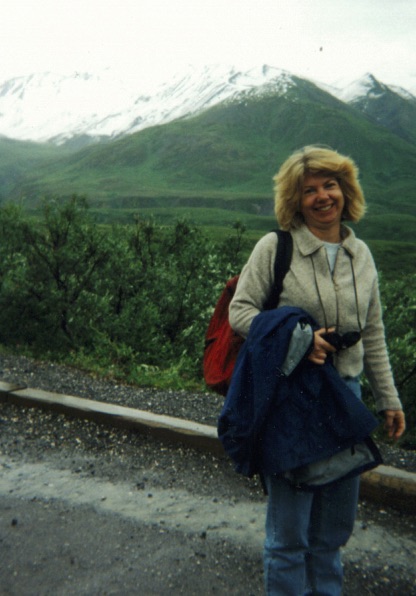 “When I applied for a dissertation fellowship from the American Scandinavian Foundation in 1989, I didn’t know that the Lois Roth Foundation existed. When I received a positive response from the ASF, however, I also received a letter—a very encouraging and substantive letter from Richard (Dick) T. Arndt, the Endowment’s founder, offering me additional funds for my dissertation research.
With funds in hand, I set off for Sweden for the first stage of a comparative politics research project focusing on the laws and policies impacting indigenous peoples in northern nation-states, with a focus first on the Nordics. The next year I would turn to Alaska and Canada. Beyond a couple of nights at a bed-and-breakfast, I didn’t have a clue what I was doing or where I was going. Oh, yes, I had a research design and a plan; but as I began my studies, the plan made less and less sense in the midst of the reality. I later learned that this is a pretty common experience when doing field research.
If I remember correctly, Dick’s letter had gently implied that I should just keep my eyes open. So that’s what I did, and I’m glad. Together, the ASF Fellowship and the Roth Foundation Award enabled me to spend nearly a full year getting to know the political system and the situation of minorities, including the Sámi people, in Sweden.
Why the Sámi? Well, I had developed a curiosity about the situation of the Sámi when I spent a summer month in Bergen, Norway, studying all things Norwegian—in Norwegian (!)—at the University of Bergen in 1980. Prior to that stay, I knew nothing of the Sámi—only that they were known in English as “Laplanders.” I now learned that a group of Sámi was staging a hunger strike in Oslo, in protest of the construction of a dam in northern Norway that would disrupt their reindeer husbandry and traditional way of life.
While completing an MA at George Washington University, I then studied international law on human rights and aboriginal title, which led me to pursue a Ph.D. in comparative politics. Not every nation-state recognizes—in law or in fact—the time-immemorial rights of indigenous societies. In at least two cases, however—the State of Alaska and Sweden—the national governments had attempted to settle indigenous legal claims and/or political differences through modern economic models: Sweden employed the model of the economic (reindeer-herding) cooperative, while the Alaska Native Claims Settlement Act in the U.S. relied on the model of the for-profit corporation.
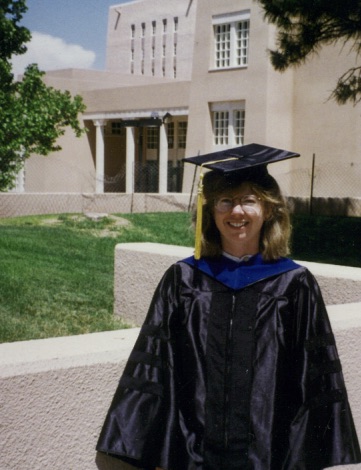
After completing my dissertation in 1992, I went on to teach at the University of Alaska Fairbanks. There I also continued my research into the legal and political rights of indigenous peoples in the circumpolar north. It was an exciting field; after the collapse of the former Soviet Union, for example, many northern indigenous societies were asserting their rights to land and water in Russia. Since the 1980s it has been heartening to read the work of indigenous scholars. On some level, I always felt a little like a tourist, an outsider looking in, with a limited perspective. Nowadays, it is a very different research environment; indigenous researchers work alongside their respected elders and local experts, and ethical principles of research are more widely known and respected.
I have learned even more about ethical principles of research working for the National Science Foundation. The NSF is a place where you are constantly learning, always reminded of the need to keep an open, “beginner’s mind.” I enjoy being part of an organization that enables people to discover and learn.
To this day I support the Lois Roth Foundation—not only because of the gift I received, but also because, in addition to research, it emphasizes cultural diplomacy and translation. All of these avenues of activity are vital to the sciences and the humanities, which to my mind make them vital for our legacy as individuals and as a culture. My wish is to encourage students and junior scholars to keep going, even when the path seems unclear. We are all tourists, and the gifts we receive help us to contribute and find the places where we might make a difference.”
——————————————————–
This text was written by Fae Korsmo and edited by LRE Chair Skyler Arndt-Briggs. Thanks to Drew Barnhart, our Media and Outreach Manager, for producing our June Portrait.
