Awardee Database

Awardees

Amy Weng

As a second generation Chinese-New Zealander, Amy Weng is committed to supporting emerging Asian Aotearoa artists through research on Asian diaspora identities within broader post-colonial and indigenous frameworks. Her Fulbright project at New York University is a comparative study of Asian American and Asian New Zealand art practices, with the goal of expanding curatorial methodologies and contemporary art narratives in Aotearoa.

The Lois Roth Foundation’s support will assist in research materials as well as building partnerships with NYC galleries and museums to present curated exhibitions of Asian diasporic experiences. After her research she hopes to continue to become a leader in the field, supporting artists and contributing to better public awareness through the arts.

Ben Gusdal

Ben Gusdal is the 2026 Project Support Norway awardee. His research examines how Norway navigates the tension between being both a major petroleum producer and a global climate leader, using methods such as interviews, public conversations, scholarly analysis, and empirical data to investigate whether oil wealth obstructs or enables Norway’s climate ambitions. The project explores how policymakers and citizens view the relationship between the oil sector, welfare-state stability, and environmental goals, and what lessons other nations might draw from Norway’s unique position.

Ben will use the support from the Lois Roth Foundation to increase his regional fieldwork outside of Oslo, specifically across western and northern Norway, to capture geographic variation in petroleum governance, Indigenous perspectives, and community-level environmental and economic impacts. 

Following his Fulbright grant and research project, Ben plans to enroll law school with a  focus on energy law. He will use his research in Norway as a foundation to contribute to renewable energy law and policy.

Alison Chan

Alison Chan is the 2026 Project Support Sweden awardee. Her research works to answer the question: “How does culture influence the way we interpret biological data, define progress, and assign meaning to illness?” Throughout the research process, she has come to appreciate that understanding disease often requires more than biochemistry alone. Using Lois Roth support to combine patient-centered interviews, narrative documentation, and visual storytelling, Alison extends her Fulbright research to examine how individuals living with Parkinson’s in Sweden experience diagnosis, treatment, and identity. This project extends beyond the laboratory, examining how science and society jointly shape the meaning of disease. By situating biomarker research within its broader social context, the project highlights that data are not culturally neutral: they gain meaning through language, ethics, and shared understanding.

Zeynep Tüfekçi

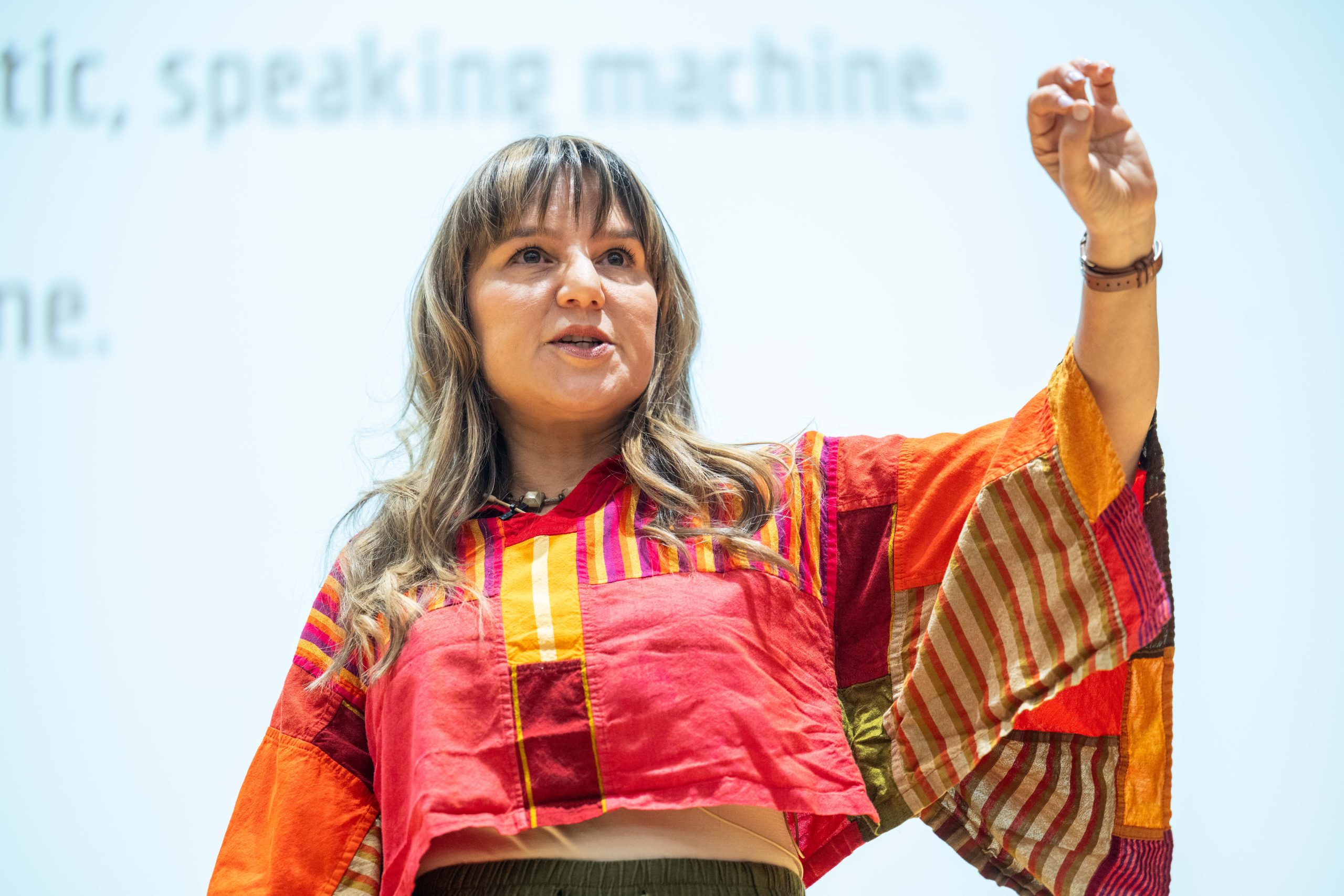
The 2026 Fulbright Distinguished Lecture was held by Zeynep Tüfeçki, a renowned sociologist and Princeton professor, New York Times columnist, and leading voice on AI and social media ethics.

In this lecture titled, “Are We Having the Wrong Nightmares about AI?”, Dr. Tüfekçi challenges the prevailing narratives around generative AI. Rather than debating optimistic visions of abundance or doomsday scenarios of mass unemployment, she argues that the most profound risks of generative AI are already here. From shattering the social mechanisms that rely on proof of accuracy, effort, and authenticity, to unleashing AI-driven persuasion at the scale of billions, she makes the case that we need to be having very different conversations about this technology.  You can view the lecture here and her TED Talks here.

Tatum Hartford

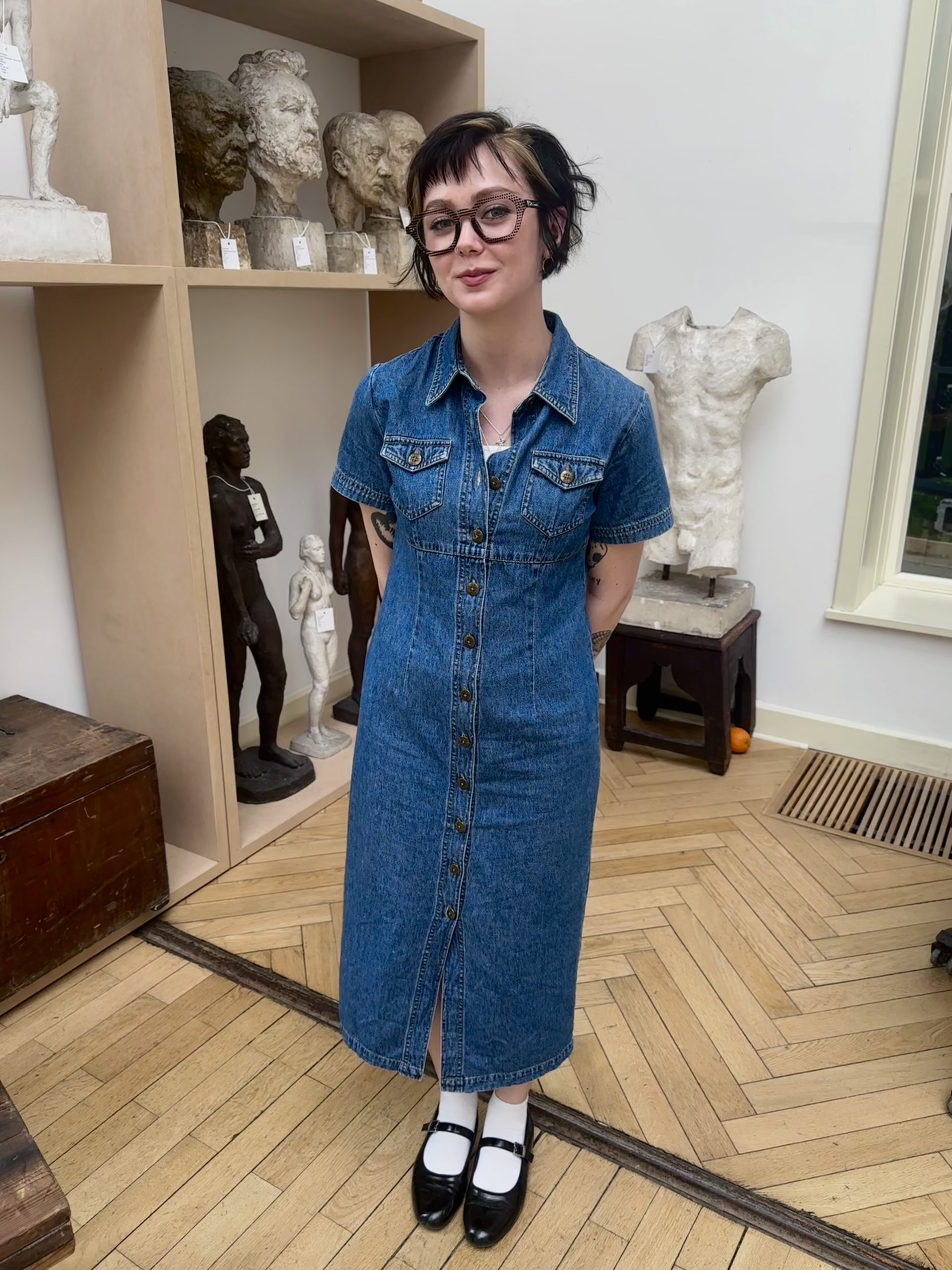
The first grant was awarded to Tatum Hartford for her work on two projects at Denmark’s National Gallery. A recent graduate of the Univ. of Toledo, she will work with the curatorial and education departments on a major reinstallation of the permanent collection that focuses on increasing the public appeal and accessibility of traditional art museums for new and underserved audiences.
Sandra Jackson-Opoku

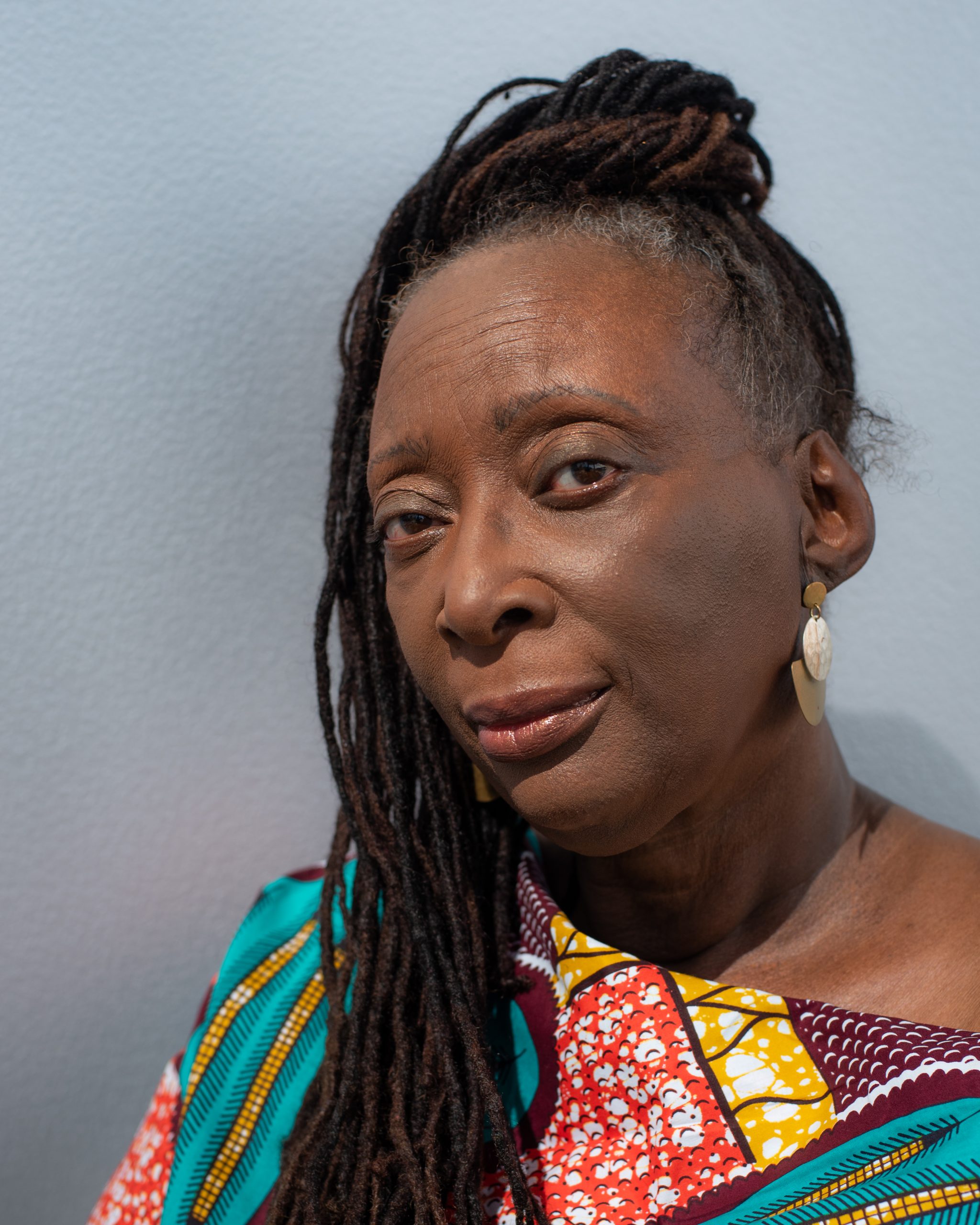
The second grant went to award-winning novelist Sandra Jackson-Opoku to conduct research for a historical novella on Emilia Regina and her son, Hans Jónatan, both enslaved in St. Croix and brought to Copenhagen in the late 18th century. As an adult, Hans joined the Danish Navy, fought with valor, sued for freedom in the courts, and (despite commendations from Crown Prince Regent, Frederick VI) lost his case; he then fled to Iceland, becoming the first Black man in that nation’s history. While Han’s place in the historical record is being documented, she is interested in fictionalizing Emilia, the mother left behind, who lived and died in Europe, far from her native land.”

Andrew Davies

Andrew Davies is a doctoral student in Plant Biology and Conservation at Northwestern University and is undertaking research in Ecuador focused on the conservation and reforestation of endangered Magnolia trees. His project, Advancing the Reforestation of Endangered Ecuadorian Magnolia Trees, uses population genetics to better understand genetic diversity among endangered Magnolia species and to inform more effective restoration efforts.

Support from the Lois Roth Foundation funded field research and collaboration with Ecuadorian conservation partners, including Pontificia Universidad Católica del Ecuador (PUCE-Quito), where Andrew will work with botanist Dr. Álvaro Pérez. His research will include collecting leaf and fruit samples from wild and reforested trees, studying pollination and seed dispersal, and evaluating whether current reforestation efforts are preserving genetic diversity.

Through his research, Andrew is focused on strengthening international collaboration among conservation organizations and generate scientific data that can be directly applied to ongoing reforestation efforts. He will also train students at PUCE-Quito in DNA extraction and preparation, contributing to the development of local scientific capacity while helping establish living collections of endangered Magnolia species in Ecuadorian botanical gardens.

Bethany Battafarano

Bethany Battafarano is a doctoral student in Ethnomusicology at the University of Chicago and is undertaking research in Ecuador on the role of Kichwa music in preserving and transmitting ecological knowledge in the Amazon rainforest. Her project, Music for the Amazon Rainforest: Ecuadorian Kichwa Musicians Conserve Ecological Knowledge, explores how traditional music carries knowledge about the environment and the cultural roles of Kichwa women.

Funding for this project supported Bethany’s field research and community engagement with Kichwa musicians and organizations in Napo, including the Napo Kichwa Artists Association (ASARKIN) and the Napo Kichwa Midwives Association (Amupakin). Her research will involve interviews, music lessons, archival research, and participation in community events, working closely with musicians Mishki Chullumbu, Silverio Grefa, and Roxana Tanguila.

Through her research, Bethany hopes to document the relationship between Kichwa music and ecological knowledge while contributing to the preservation of Indigenous cultural traditions. As part of her community engagement, she will establish a multilingual community choir with ASARKIN, bringing together local participants to sing in Kichwa, Spanish, and English and creating opportunities for cultural exchange and intergenerational learning.

Anouk Guilhaume-Levy

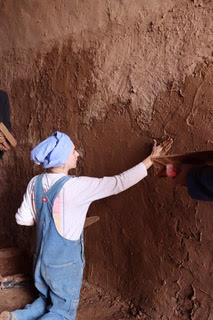
Anouk Guilhaume-Levy, architecture student from the University of California– Berkeley, is the recipient of the 2026 Project Support Morocco award for her project on adapting traditional building techniques for modern architectural technology in post-disaster reconstruction. With the support of the LRF award, Anouk will photograph heritage sites where reconstruction is underway, and conduct interviews with earthquake-affected communities and those involved in restoration. She hopes to make this research available to local communities and architects who combine traditional and modern techniques.

Upon her return to the US, Anouk plans to pursue a graduate degree in material research and building sciences, using her research on rammed-earth architecture techniques to apply to modern built environments.

Emily Boyett

Emily Boyett is the 2026 Project Support Awardee for Finland. Growing up in a newspaper family in rural Illinois, Emily’s dedication to seek the truth encouraged her to the world’s leading journalism school and learn how to engage with people from diverse background and perspectives. Her continued commitment has motivated her research project to compare media literacy and trust in Finland and the United States. This Project Support Award will support Emily pursuing a Master of Global Politics and Communication at the University of Helsinki. After learning about other countries’ digital policy and how to communicate political differences with her Fulbright Program, she plans to pursue a JD/ Master of Public Policy dual degree to prepare herself for public service. She hopes to use her expertise in research or advocacy roles to combat digital extremism.

Gabriela Pinasco Nájera

Gabriela Pinasco Nájera is a journalist, documentarian and human rights activist pursuing a Master in Journalism at NYU. Her work has focused on first-hand accounts of resistance to human rights abuses in South America. While under NYU’s Global Beat program in Argentina, Gabriela produced a report published by PBS and directed a documentary about Ramón Inama’s reunion with his sister, 47 years after she was abducted as a newborn during Argentina’s last military dictatorship. 

She was also admitted to the Gallatin Global Fellowship in Human Rights through which she collaborated with members of the Kichwa community in Ecuador in the filming of a short documentary now serving as her master’s thesis project, recently screened at the 2026 NYU Documentary Film Festival. 

The piece highlights the conservation work carried out by Kichwa communities, who resist through activism as well as their culture and ancestral language. Simultaneously, the film reveals the real scale of environmental damage caused by mining, which is polluting rivers that serve as the only source of water for many Indigenous communities. Now, more than ever, it is crucial to document and share these contrasts and realities before it is too late.

Gabriela is now in the post-production phase of this documentary, using the Lois Roth Foundation’s support to cover film color grading processes and to support the film’s distribution, including for international festival entries to reach audiences across different countries and platforms.

Ben Branaman

Fulbright Research Grantee Ben Branaman, Arizona State University graduate, is the recipient of the 2025 Project Support Award Norway. Ben’s research in Norway involves studying the use of Electronic Monitoring (EM) as an alternative criminal sentencing practice, determining its impact on life outcomes, public safety and human rights. Working with Kriminalomsorgens Høgskole og Utdanningssenter (KRUS), Ben will examine experiences in Norway’s EM program through interviews with probation staff and incarcerated individuals that use EM. Through these interviews, he hopes to understand how serving criminal sentences at home, as opposed to in prison, affects life outcomes. 

The Lois Roth Award will enable Ben to conduct additional interviews outside of Oslo and collect vital research data that enhance understanding on Electronic Monitoring in Norway.

Prior to his Fulbright and LRF award Ben studied criminology, and plans to return to Arizona to use his research and experience in carceral environments to work towards a PhD and a career in prison reform research. Ben hopes to use the knowledge gained from his Project Support activities in the US to influence methods of sentencing and impact recidivism rates. 


Lydia Barrett

Lydia Barrett, PhD researcher at the University of California Santa Cruz, is the recipient of the 2025 Project Support Award Morocco for her project “Singing Resilience in the Climate Crisis: Women’s Musical Migration to Morocco. Lydia’s musical anthology research focuses on the sharing of songs by women migrants from across the African Continent.

“These women and children come to Morocco in the hopes of crossing into Europe, but once they arrive, returning home becomes as difficult as migrating to a new country. Many continue to attempt European migration, while others make a new home on Morocco’s northern coast. These women sing together to remember, to connect, and to survive.”

With the support of the LRF award, Lydia aims to produce an anthology album of songs, as well as a companion website to share interviews, field recordings, and soundscapes. The album and companion website expand the scope of the project, inviting listeners from around the world into the artistic sound worlds of these women composers and performers.

Megan Thiede

Megan Thiede is the 2025 Finland Project Support recipient for her research project to optimize the job application service lifecycle for individuals with cognitive and visual impairments. 

“Working alongside students from 10+ different countries, while learning how to conduct research for individuals with disabilities and neurodiversity, is as challenging as it is rewarding” She hopes that her research will expand upon the connection between service design and accessibility on a more holistic level.

The Project Support award will fund Megan’s participation in the Green Innovators’ Challenge at the Institut National des Sciences Appliquées in France where she will conduct a research project on increasing university accessibility and developing sustainability strategies through site visits and workshops with sustainability experts. In addition, the award will assist her in attending the Smart Accessibility Conference in France, an annual convention of thought leaders, gathered to share research and insights about current accessibility challenges and techniques to enable equal opportunity.

A graduate of the University of Colorado Boulder, Megan is completing a Master of Social Sciences at Tampere University in sustainable societies and digitalisation, with a specialization in accessibility and diversity in digital services.

Nicole Tong

Nicole is currently pursuing graduate education at Stanford University. She aims to contribute to the development of ethical AI through her project, “Design of Artificial Intelligence Systems through Gender and Intersectionality.” Nicole’s research investigates the historical and modern discrimination faced by the Sámi people, with a focus on privacy and data. Nicole will use the Award to develop educational materials demystifying AI for marginalized communities, collaborate with organizations focused on AI literacy, and present her findings at conferences. She hopes to provide insights into the potential positive applications of AI in preserving indigenous knowledge through language technology and supporting traditional practices.

Dr. Bart Pushaw

Most of the Inuit artworks that are the subject of Dr. Pushaw’s study are not in Greenland, taken and residing in collections in places as diverse as Oslo and Kansas. Dr. Bart Pushaw, of the University of Tennessee, Chattanooga researches, collates, historicizes, and analyzes these artworks in order to advocate for their return home.

Indulgent Images: Colonial Inuit Art and the Atlantic World is the first attempt in forty years to establish a critical corpus of Inuit art produced in Greenland between 1680 and 1900. As Dr. Pushaw’s first academic monograph, the project foregrounds close reading of historical art and expressive culture by Inuit makers to understand how Kalaallit Inuit envisioned futures for themselves and navigated colonialism in their own terms.

Funds from the Lois Roth Foundation will support Dr. Pushaw to collaborate with the Nuuk Art Museum, Inuit scholars, and community stakeholders to co-create knowledge on historical art and material culture, as well as study, consult, and photograph otherwise inaccessible artworks that are critical to his academic monograph.

Alex Gil

Alex Gil (Yale) received an honorable mention for his translation of Aimé Césaire’s lost drama on the Haitian Revolution and Toussaint Louverture, written during WWII, under the watchful eye of Vichy censors in Martinique. Now available for the first time in English, . . . . . . And the Dogs Were Silent / . . . . . . Et les chiens se taisaient (Duke UP, 2024) is a bilingual edition of this meditation on Black revolution and liberatory violence, rife with Césaire’s entrancing poetry and theatrical verve.

Inass Esshrir

Moroccan doctoral student Inass Esshrir was awarded the first grant of the Roth pilot project- Inbound Support grant. Inass’s research focuses on Moroccan storytelling and the work of Paul Bowles, an influential American who lived in Morocco for many years, studying its music and storytelling traditions. Through archival research in the Bowles collection at the University of Delaware in Newark, she is exploring notes on his unpublished, as well as published translations and on his relationships with the storytellers with whom he worked. With this added textual and contextual information, Inass hopes to both expand our awareness of Moroccan storytelling and reshape the scholarly understanding of Bowles’s work.

Fiona Graham

An honorable mention was awarded to Fiona Graham for her translation of The Rocks Will Echo Our Sorrow: The Forced Displacement of the Northern Sámi (UMN Pr., 2024). In a remarkable blend of historical reportage, memoir, and lyrical reimagining, Sámi journalist Elin Anna Labba travels to the lost—and still abandoned—homeland to tell of the forced removal of her nomadic ancestors, and how it both lives on in the hearts of Sámi today and echoes indigenous histories around the world. The book won Sweden’s prestigious August Prize for Best Nonfiction in 2020.

Johnny O. Hishmeh

The 2025 Lois Roth Award for excellence in cultural diplomacy goes to Johnny O. Hishmeh, Public Diplomacy Officer for Public Engagement in the Venezuela Affairs Unit at the U. S. Embassy in Bogota.

Johnny exemplifies the legacy of Lois Roth through his patience, wisdom, and generosity in supporting his team in Caracas. Under challenging conditions from Bogota, Johnny has mentored his team and university partners in Venezuela , guiding them through project management, leadership, and financial oversight. His innovative educational diplomacy initiatives have resulted in 26 new U.S.-Venezuelan university partnerships. Notably, he and his team created a U.S.-style internship program with VenAmCham, offering industry tours and applied learning for 60 students from two top universities, an initiative that has laid the groundwork for future programs.

M.R. Ghanoonparvar

For 2025, the first prize goes to M.R. Ghanoonparvar (UT Austin) for his translation of Ghazaleh Alizadeh’s two-volume novel The House of the Edrisis (1991-2) (Syracuse UP).

The House of Edrisis plays on historical parallels of the Islamic Revolution in Iran within its setting of 1910s Soviet Turkmenistan. Following the drama and dissolution of the powerful Edrisis family, the novel’s dark comedic style lends itself to such complex themes of revolution, hierarchy and social change.

M.R. Ghanoonparvar is professor emeritus of Persian and comparative literature at the University of Texas, Austin. He has translated over 30 books between Persian and English, including The Patient Stone by Sadeq Chubak and Savushun by Simin Daneshvar. In addition to translation, he is a widely-published author on Persian culture, often co-authoring works alongside his wife, Diane Wilcox.

Nicole Finnemann

Honorable Mention for the 2025 Lois Roth Award goes to Nicole (Nikki) Finnemann, Public Affairs Officer at the Consulate General in Barcelona.

Nikki has consistently demonstrated superior creativity, profound cultural sensitivity, and remarkable human warmth in fostering meaningful international collaboration. She led the 2025 Academy for Women Entrepreneurs Continental Summit, connecting women entrepreneurs across Europe with AI-enhanced business tools, and launched JumpStartUp, linking Barcelona’s biotech community with counterparts in Boston to foster scientific and cultural exchange. Previously, she spearheaded the Department’s public diplomacy engagement at the Ninth Summit of the Americas, highlighting cultural voices, and pioneered the Department’s first modern diaspora cultural engagement strategy, positioning Latin American communities as vital cultural bridges in shaping summit priorities.

Abeeda Shahid Talukder and Aria Fani

The second 2025 MLA-Roth Translation Prize goes to The Shape of Extinction (Asemana Books), a collection of Bijan Jalali’s minimalist poems by poet Abeeda Shahid Talukder and Aria Fani (UWash), which masterfully conveys Jalali’s meditative style.

Poet and author of Ghazal Cosmopolitan provides a brilliant reflection of the collection and the translators’ work: “where Fani’s insights contextualize the unique place Jalali has in the ‘overlapping and plural modernisms’ of Persian poetry— one of the world’s richest poetic traditions— Adeeba Shahid Talukder’s fine touch as a co-translator pierces the exosphere of craft, reaching the sphere of the elusive beloved, a space she knows well as a poet who draws from the Urdu tradition. The translated poems in Shape of Extinction settle as dew, refracting the mighty, delicate tendrils between the past and the yet to come, in Jalali’s Persian, a rare gift”.

*The Prix Coindreau Prize, The Jeanne Varnay Pleasants Prize for Language Teaching, and the CASVA-Henry & Judith Millon Award are currently inactive.