Literature & Translation
At a time when many believe there is no need to learn any language but English, the Roth Foundation reminds us that languages remain crucial to cross‐cultural communication and that compelling translations of literary works deepen our understanding of other cultures, communities and histories. An example of this is provided by Lois Roth’s 1967 translation of the Swedish mystery novel Roseanna, which anticipated the immense popularity of Scandinavian crime fiction in the English‐speaking world. This translation of the debut novel of Maj Sjöwall and Per Wahlöö, the Swedish originators of the genre, has remained in print for over four decades.
Our first translation prize, the Prix Coindreau, was conducted in collaboration with the Société des Gens de Lettres (SDGL) and recognized outstanding translations of American literature into French from 1993 to 2016. Working in tandem with organizations including the Modern Language Association of America (MLA), International Prize for Arabic Fiction (IPAF), Elizabeth Kostova Foundation (EKF) and American Institute of Iranian Studies (AIIrS), the Roth Foundation currently funds a range of programs at the nexus of literature and translation:
- The Bulgarian-English Writing Programs,
- The Dick Arndt Prize for an Outstanding Work on Cultural Diplomacy,
- The Arabic Literature Tour, and
- Three prizes for exemplary achievement in literary translation:
- from any language into English (the MLA‐Roth Translation Award)
- from Persian into English (the Persian Translation Prize)
- from English into Bulgarian (the Dyankov Translation Prize),
- The Jeanne Varnay Pleasants Prize for Language Teaching (no longer active)
“Translation is really a very extreme form of close reading. At every minute juncture of the text, you are obliged to ask yourself: why did the writer choose this particular word and not another, why is there a shift in linguistic register or a syntactic inversion, does a cadence or word-play contribute sufficiently to meaning to require that it somehow be reproduced in translation? Wrestling with these issues is hard work but it is also intensely pleasurable because it requires immersing yourself in the rich textures and complex structures of a great work and coming to understand how they join together to convey to us perceptions of humanity and the world we would not otherwise possess.” — Robert Alter
Our Awards
Arabic Literature Tour
In fall 2019, the Roth Foundation began a collaboration with the International Prize for Arabic Fiction (IPAF) that embodies how translation puts international and cross-cultural exchange into action: the US tour of a prize-winning Arabic-language author and his/er translator. This year, Moroccan author Yassin Adnan and US translator Alexander Elinson present the novel Hot Maroc, longlisted for the IPAF in 2017 and published in translation by Syracuse University Press in 2021.
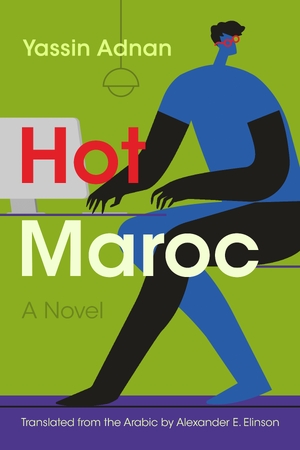
Darkly comedic, Hot Maroc is told through the eyes of the hapless Rahhal Laâouina, aka the Squirrel. Painfully shy, not that bright, and not all that popular, Rahhal somehow imagines himself a hero. With a useless degree in ancient Arabic poetry, he finds his calling in the online world, where he discovers email, YouTube, Facebook, and the news site Hot Maroc. The novel gives a vital portrait of the challenges faced by today’s Moroccans in a repressive society, where adherence to traditional cultural icons both anchors and stifles creative production.
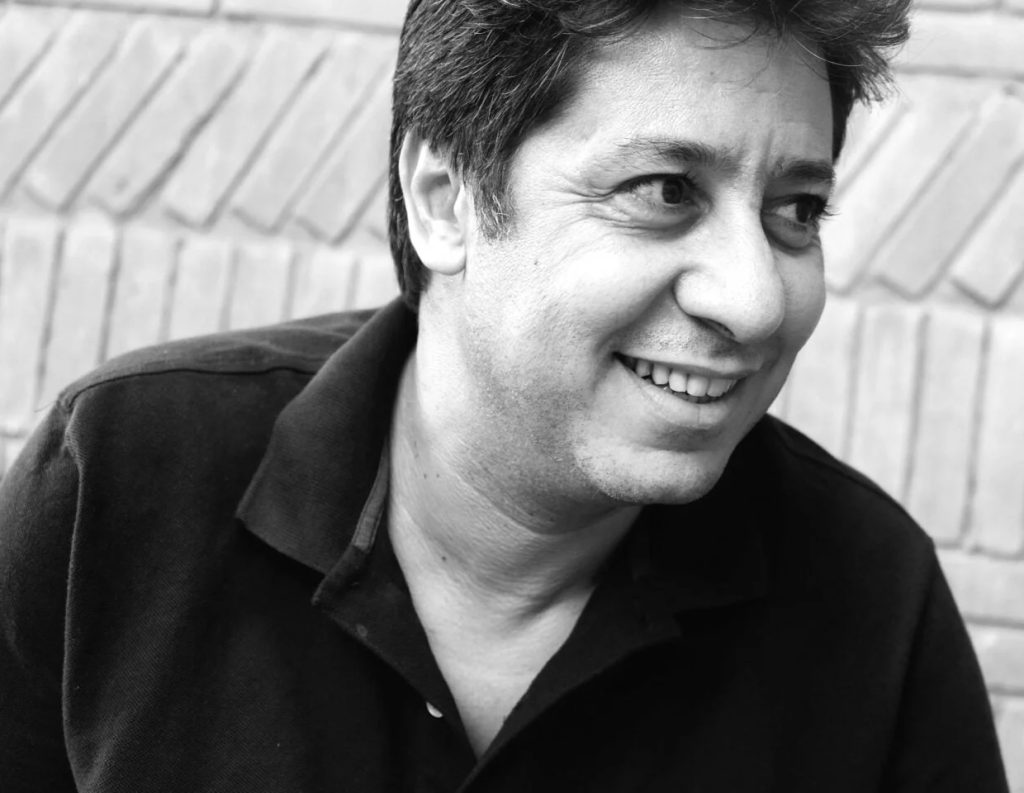
Yassin Adnan —poet, fiction writer, editor and TV presenter— is the author of 6 poetry collections, 3 short-story collections, a novel and a book about travel. He serves as president of the Marrakech English Book Festival and is the founder of two literary magazines. The host of cultural TV programs, a radio show and a podcast, he has also edited various titles, including the anthology Marrakech Noir (2018), and participated in a range of international programs, including in the U.S.
Alexander Elinson teaches Arabic Language & Literature at Hunter College/CUNY and directs their Summer Arabic Program. His research interests include Arabic and Hebrew literature from the pre-Islamic to the modern period. His current book project, Looking Back: The Poetics of Loss and Nostalgia in Muslim Spain, examines the intersection between literary convention and poetic subjectivity; his current research and translation projects include looking at Moroccan prison writing.

Dyankov Translation Prize
The Dyankov Translation Prize was established in 2007 to acknowledge superlative translations of English‐language literature into Bulgarian. The prize is named for Krustan Dyankov, renowned Bulgarian translator of American literature and is administered by the Elizabeth Kostova Foundation.

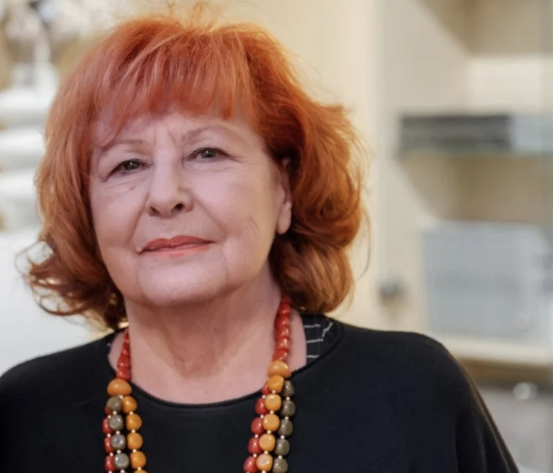
In winter 2024-25, two accomplished translators were awarded with the Dyankov Award. Elka Videnova won the Grand Prix for her translation of Night Boat to Tangier (2019) by the award-winning Irish author Kevin Barry. In the Algeciras terminal, where the night ferries for Tangier depart and dock, Charlie and Maurice exchange banter, solidarity and regrets, as they desperately seek Charlie’s young daughter, Dilly.
The Special Award went to Iglika Vassileva for her translation of J.M. Coetzee’s The Master of Petersburg (1994). This award-winning and complex novel interweaves the life of the author and the history of Russia with the life of the protagonist Fyodor Dostoyevsky.
MLA‐Roth Translation Award
The MLA‐Roth Award for translation of a literary work into English was established in 2000. Like few other translation prizes given at the annual Modern Language Association convention, this award is not restricted to translations from a specific language. As a result, its recipients have made works from all over the globe accessible to English-language readers. This year, a winner and two honorable mentions were named.
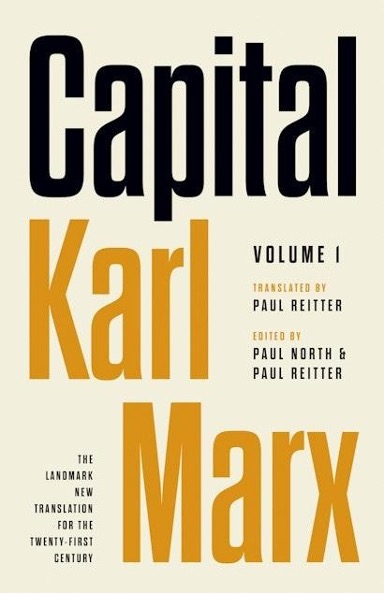
In its 18th edition, the MLA-Roth Award for a Translation of a Literary Work went to Paul Reitter (Ohio State) for his translation of of Karl Marx’s Capital: Critique of Political Economy (Princeton UP, 2024). The first new English translation in fifty years and the only one based on the last German edition, revised by Marx himself—it captures the momentous scale and sweep of Marx’s thought while recovering the elegance and humor of the original. This critical edition features extensive original commentary and a foreword by acclaimed political theorist Wendy Brown.
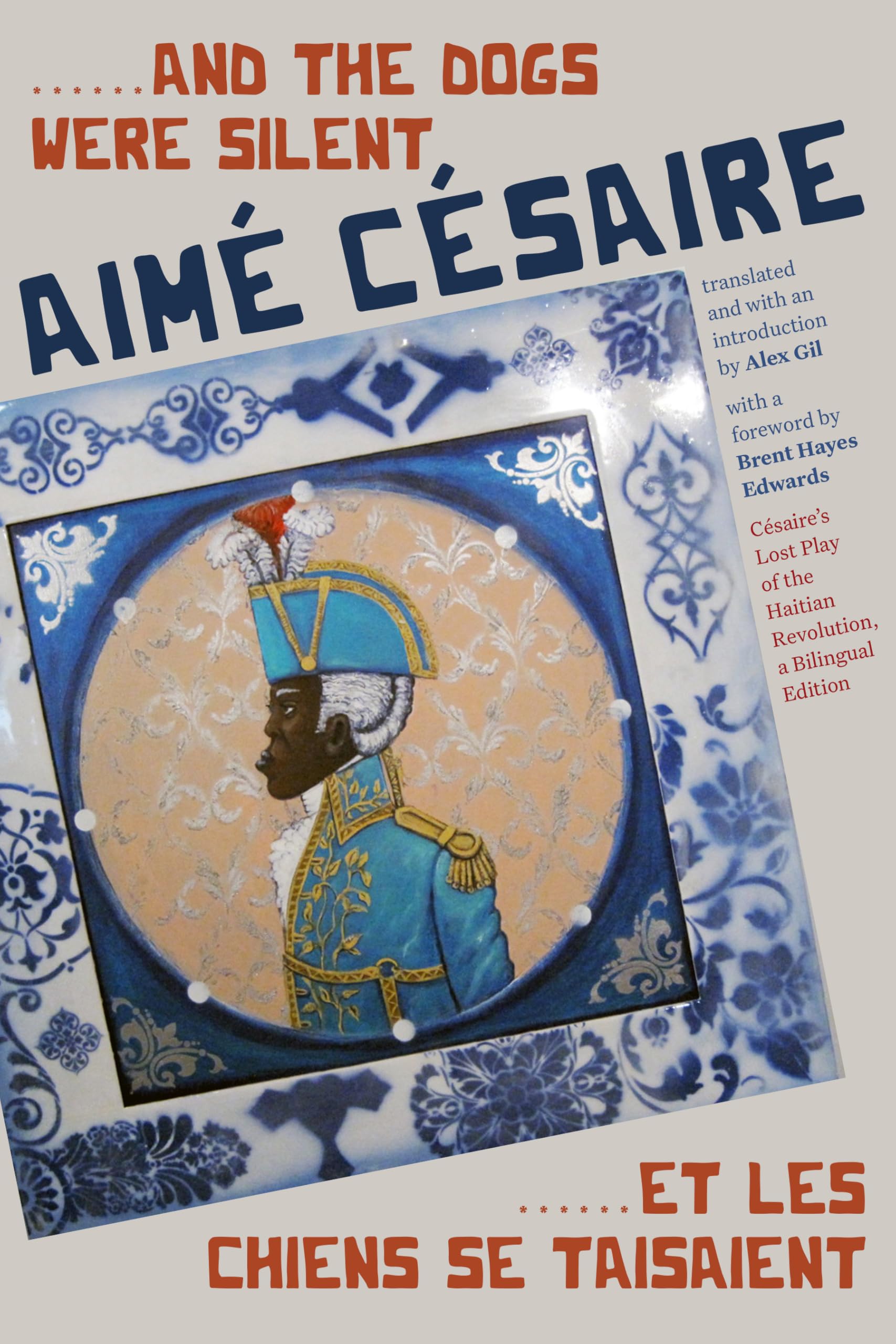
Alex Gil (Yale) received an honorable mention for his translation of Aimé Césaire’s lost drama on the Haitian Revolution and Toussaint Louverture, written during WWII, under the watchful eye of Vichy censors in Martinique. Now available for the first time in English, . . . . . . And the Dogs Were Silent / . . . . . . Et les chiens se taisaient (Duke UP, 2024) is a bilingual edition of this meditation on Black revolution and liberatory violence, rife with Césaire’s entrancing poetry and theatrical verve.

The other honorable mention was awarded to Fiona Graham for her translation of The Rocks Will Echo Our Sorrow: The Forced Displacement of the Northern Sámi (UMN Pr., 2024). In a remarkable blend of historical reportage, memoir, and lyrical reimagining, Sámi journalist Elin Anna Labba travels to the lost—and still abandoned—homeland to tell of the forced removal of her nomadic ancestors, and how it both lives on in the hearts of Sámi today and echoes indigenous histories around the world. The book won Sweden’s prestigious August Prize for Best Nonfiction in 2020.
Persian Translation Prize
The Roth Foundation has sponsored the Persian Translation Prize, juried by members of the American Institute of Iranian Studies (AIIrS), since 2001. The prize honors superlative translations into English of contemporary works and ancient Persian texts on a biennial basis. For 2025, the first prize goes to Prof. em. M.R. Ghanoonparvar (UT Austin) for his translation of Ghazaleh Alizadeh’s two-volume novel The House of the Edrisis (1991-2) (Syracuse UP). The second goes to The Shape of Extinction (Asemana Books), a collection of Bijan Jalali’s minimalist poems, by poet Abeeda Shahid Talukder and Aria Fani (UWash), which masterfully conveys Jalali’s meditative style.
The House of Edrisis plays on historical parallels of the Islamic Revolution in Iran within its setting of 1910s Soviet Turkmenistan. Following the drama and dissolution of the powerful Edrisis family, the novel’s dark comedic style lends itself to such complex themes of revolution, hierarchy and social change.
M.R. Ghanoonparvar is professor emeritus of Persian and comparative literature at the University of Texas, Austin. He has translated over 30 books between Persian and English, including The Patient Stone by Sadeq Chubak and Savushun by Simin Daneshvar. In addition to translation, he is a widely-published author on Persian culture, often co-authoring works alongside his wife, Diane Wilcox.


Poet and author of Ghazal Cosmopolitan provides a brilliant reflection of the collection and the translators’ work: “where Fani’s insights contextualize the unique place Jalali has in the ‘overlapping and plural modernisms’ of Persian poetry— one of the world’s richest poetic traditions— Adeeba Shahid Talukder’s fine touch as a co-translator pierces the exosphere of craft, reaching the sphere of the elusive beloved, a space she knows well as a poet who draws from the Urdu tradition. The translated poems in Shape of Extinction settle as dew, refracting the mighty, delicate tendrils between the past and the yet to come, in Jalali’s Persian, a rare gift”.
Bulgarian Arts Exchange
Expanding its reach, the Elizabeth Kostova Foundation (EKF) has begun holding its flagship Sozopol fiction Seminars in alternating years with an International Poetry Conference. Taking place in June, these are followed by the CapitalLiterature international literary festival, held in Bulgaria’s capital, Sofia. EKF hosts a dizzying array of new programs on all things writing that you can read about HERE.

In June 2025, we supported the interdisciplinary CapitaLiterature Festival in Sofia. Exploring the theme “Paradise Lost/Regained,” it opened literature to the public and professionals across the arts through 14 events, including talks, concerts, quizzes, workshops, and readings. The festival honored US graphic novelist Art Spiegelman, opening with an interview with Vladimir Poleganov, the Bulgarian translator of Maus, and closing with the Bulgarian premiere of the 2024 documentary Art Spiegelman: Disaster Is My Muse.

The theme “Paradise Lost/Regained” allowed for the interpretation of the meanings of paradise through music, dance, cinema, art, and even botany. Through the interaction of these diverse forms of art, a narrative formed of paradise as a lost reality of humanity’s own doing, and yet a newfound ideal for the future.
Richard T. Arndt Prize
The Lois Roth Foundation and the Public Diplomacy Council of America are pleased to announce the 2025 inauguration of the Richard T. Arndt Prize for an Outstanding Work on Cultural Diplomacy. This biennial award honors Dick Arndt, former US Foreign Service Officer and founding-chair of the Foundation, for his groundbreaking role in cultural diplomacy research. (Read MORE about Dick.) Of the six short-listed works for the prize, the jury ultimately selected two co-winners and an honorable mention. Our congratulations to the authors!

Dr. Nicholas Cull (USC) is a 2025 winner for Reputational Security: Refocusing Public Diplomacy for a Dangerous World (2024, Polity Press). A theoretical rethinking of the relationship between realpolitik and “soft power” for the 21st century, supported by a convincing array of historical and current examples. This book argues that, particularly in the context of today’s radically different media and communications environment, national reputation is fundamental to national wellbeing and security. Chapter Seven explores the specific roles played by cultural diplomacy in relation to national reputation, situating these in a sophisticated and useful context and providing examples of a range of successful cultural diplomacy efforts.

Dr. Pete Millwood (Univ. of Melbourne) will also receive the 2025 prize for Improbable Diplomats: How Ping-Pong Players, Musicians, and Scientists Remade U.S.-China Relations (2023, Cambridge Univ. Press). This readable, well-documented academic contribution to work on Sino-American relations in the 1970s investigates how cultural diplomacy remade international affairs. Methodologically innovative, it fleshes out the role and status of NGOs, situated between governments and individuals, and makes use of new archival materials and original oral history interviews. The result is a well-rounded transnational history that examines linguistic and cultural points of view, as well as the agency of Chinese individuals and organizations of the time.
Dr. Elisabeth Piller (Univ. Freiburg) receives an honorable mention for Selling Weimar: German Public Diplomacy and the United States, 1918-1933 (2021, Franz Steiner Verlag). While much attention has been paid to Cold War US cultural diplomacy efforts toward Germany, very little has focused on Germany’s use of public diplomacy to shape US views in any period. This book notes that, for the Weimar Republic democracy, “the need for systematic public diplomacy was among the central lessons” of WWI, and the country accordingly redesigned and prioritized its cultural outreach, especially toward the U.S. This innovative history of Germany’s interwar “American project” goes beyond economic accounts to explain the puzzlingly rapid reversal in US relations with Germany post-WWI and reveals the roots of German self-representations to this day.
