Awardee Database

Awardees

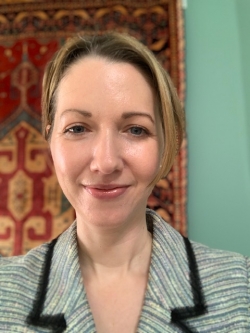
Holly Zardus

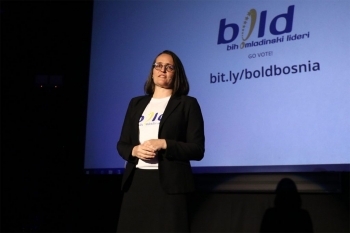
An Honorable Mention was also awarded to Cultural Affairs Officer Holly Zardus from the U.S. Embassy in Sarajevo for her creation of BOLD (Bosanski Omladinski Lideri), a multi-faceted program to address the problems facing Bosnia and Herzegovina (BiH) by developing a new cadre of leaders. Holly marshaled a full range of public diplomacy programming, leveraged support from her network in Washington, D.C., and included the participation of the Ambassador and staff from other agencies and sections at post. She took advantage of existing exchange programs, and where those didn’t exist, she created new business-focused projects and short-term academic programs focused on civic and economic development.  BOLD has drawn interest from other posts and has the potential for becoming a regional program.
Davida MacDonald

The 2020 Lois Roth Award went to Cultural Affairs Officer Davida MacDonald from the U.S. Embassy in Rabat, Morocco. Davida was recognized for the “Moonshot Morocco” campaign she designed that transformed the 50th anniversary of the first moon landing into a year-long celebration and captured the imagination of thousands of Moroccans. The campaign provided STEM programming to Moroccan youth and demonstrated America’s leadership in the fields of space exploration, technology and innovation. “Moonshot Morocco” consisted of 50+ events across 24 Moroccan cities and engaged more than 15,000 STEM enthusiasts and emerging entrepreneurs in person and tens of thousands online through complementary social media content. The campaign capstone, “Moonshot Morocco Youth Festival,” attracted more than 6,000 attendees over three days and consisted of more than 100 activities, including workshops, plenaries and public events offering simultaneous programming.  Participants described the festival–the first of its kind to take place in Morocco–as one of the most inspiring events they had ever attended.

David Levin

An Honorable Mention was also awarded to ECA’s Senior Program Manager for Diversity and Inclusion, David Levin.  During his 36 years with ECA, he has built Diversity and Inclusion into ECA’s ethos instilling his fervent belief that international exchange and its life-changing benefits should be available to everyone and that exchanges are stronger and more impactful when they truly represent the diversity of American society and of societies abroad. It was David who connected the Fulbright Teacher Exchange program and Youth Exchanges in the 1980s, pushing ECA to expand its focus to inner-cities and rural areas. And way back in 1994, David moved to increase exchange opportunities for persons with disabilities by designing a grant competition that became the National Clearinghouse on Disability and Exchange. Today, American host families from small communities welcome diverse participants from countries around the world and American students from diverse places around the United States venture abroad. The diversification of ECA programs didn’t just happen overnight—it is due to David Levin’s efforts.

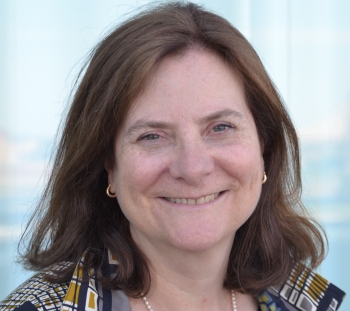
Mary Kirk

The 2020 Ilchman-Richardson Award went to the Bureau of Educational and Cultural Affairs Director of Academic Exchange Programs, Mary Kirk. Mary and her team have extended the breadth of the Fulbright Program’s outreach and selection processes and reinforced their connection to foreign policy priorities, while ensuring the health, safety and productivity of the exchange experience for all Fulbrighters. Under her leadership, her team built alumni and partner networks and reinvigorated the Fulbright US scholar program, while strengthening financial accountability and management practices and expanding training and resource materials for ECA staff, Posts and Fulbright commissions. She is an undisputed master of meeting the daunting complexities and competing demands involved in the budgetary intricacies of extensive world travel for negotiations, mentoring and oversight.  When the coronavirus pandemic hit, Mary led her staff to quickly pivot to address the many unique issues that arose within exchange policies and procedures in a virtual environment. She embodies the Roth/Ilchman/Richardson legacy through her tireless dedication and creative, insightful approaches as a cultural diplomacy leader and manager.

Carrie Clifford

Carrie Clifford is conducting comparative research surrounding mental health and child development in Native American and Maori communities. She is using her Project Support award to fund trips to Native American communities in Colorado as well as to provide access to materials for an intensive course on American Indian history and health at Johns Hopkins University. Upon her return to New Zealand, Carrie plans to complete her PhD in Clinical Psychology in order to work to improve the mental health of Maori natives in Aotearoa.

Shahad Al Rawi & Luke Leafgren

Shahad Al Rawi, the Iraqi author of The Baghdad Clock, and her translator, Luke Leafgren, toured colleges and universities in the northeastern U.S. Here they are pictured at Amherst College, where they read from the novel in both Arabic and English and discussed their experiences with writing and translation.

The Baghdad Clock won the Edinburgh First Book Award and was shortlisted for the International Prize for Arabic Fiction. The story begins in 1991: Two young girls meet and become best friends in a Baghdad bomb shelter, where they have taken refuge from Allied aerial attacks. They share their hopes and dreams, interwoven with fantasy and illusion. A stranger arrives from the mysterious future of the city bearing prophecies, causing families to flee the city en masse, leaving it empty. When a third girl joins them, the friends begin to write a secret history of their neighborhood to save it from oblivion.


RT Hon David Miliband

In his lecture titled “The New Arrogance of Power: Global Politics in an Age of Impunity,” Mr. Miliband examined the shift today in international relations away from checks and balances on the use of power, and towards an age of impunity. His explanation of how the rules-based international order forged after World War II is being undermined serves as an urgent call to preserve the rule of law and protect the most vulnerable. A video of the lecture delivered at Pembroke College, University of Oxford, is available on their website.

Bulgarian-English Writing Programs, 2019

Fellows: Joanna Elmy (BG), Eirill Falck (US), Aleksandar Hristov (BG), Maria Makedonska (BG), Karen Outen (US), Karen Parkman (US), Maria Reva (US), Albena Shkodrova (BG), Stanislava Slavova-Petkova (BG) and Melissa Wan (UK).

Marta Garcia de Bello

Marta’s leadership as a Cultural Affairs Specialist has been crucial to maintaining diplomatic relationships in Venezuela even after the official American presence there ended. Due to Marta’s resilience in the face of these difficult circumstances, outreach activities by EducationUSA and American Spaces continue guiding current and future leaders of Venezuela to become agents of positive change.

Helen Reidy

As Cultural Affairs Specialist at the U.S. Consulate General in Australia over the past 27 years, Helen has inspired hundreds of Australian students to study abroad in the United States by creating specialized outreach programs for EducationUSA and increasing media coverage to make opportunities more visible. Her unwavering dedication to educating students about study in the United States led to the U.S. becoming the first-choice destination for study abroad for Australian students. Helen has created long-lasting professional relationships that will continue to strengthen the greater U.S.-Australia partnership for years to come.

Daniel Sherrell

Daniel Sherrell, of the University of Adelaide, is writing a book centered around young people’s perceptions of climate change as it becomes an ever more serious threat. His LRE Project Support award will allow him to conduct ethnographic research on the island of Tuvalu concerning the challenges that its inhabitants are already facing as a result of climate change. Upon his return to the U.S., Daniel plans to incorporate this research into his book in order to raise awareness about the ways in which climate change has begun to seriously affect our planet.

Cameron Turley

This year’s award went to Cameron Turley, of City University of New York. Cameron is studying Inuit settlements and their relationship to ethnogenesis in Greenland. His award will help to provide access to archival materials and local scholars, allowing him to further enrich his studies. Upon completion of his project, Cameron plans to pursue an archeological career in Greenland.

Elise Kolle

Elise Kolle, of the New England Conservatory of Music, is conducting research on the historical harps housed at the Nydahl Collection in Stockholm. Elise is investigating the history of two nineteenth-century harps while learning about museum work from the Collection’s curators. Funds from the Roth Foundation will allow Elise to perform a series of lectures and recitals in which she will perform harp music and speak about Swedish instrument makers of the 19th century. Elise hopes that her work at the Nydahl Collection will enrich her experience as a scholar of music and help her further develop her career in musicology and museum work upon her return to the U.S.

Caitlin Vitale-Sullivan

Caitlin Vitale-Sullivan, of Idaho State University, is studying kulning, a type of traditional Swedish folk music used to call cattle and communicate over long distances. She is interested specifically in the interaction between landscape and sound, and the resulting potential to combine landscape sounds with vocal and instrumental music to create an ensemble. Funds from the Roth Foundation will support Caitlin’s enrollment in supplemental workshops that will deepen her experience of Swedish folk music and dance. Upon her return to the U.S., Caitlin hopes to pursue a doctorate in landscape architecture and agroecology, using her knowledge of nature’s interaction with music to promote the importance of green spaces in communities.

Kaja Gjelde-Bennett

Kaja Gjelde-Bennett, of Pacific Lutheran University, is studying language rights and revitalization of the Sami, the Indigenous peoples of Northern Scandinavia and the Kola Peninsula of Russia. Her Roth Foundation award will allow her to travel to South Sami institutions in Norway and Sweden in order to gain access to their unique archives and conduct interviews with Sami language educators, community leaders, and politicians. Upon her return to the U.S., Kaja hopes to pursue a PhD in Indigenous Studies or Sociolinguistics in order to advance indigenous language revitalization.

Kristen Gleason

Kristen Gleason, of the University of Georgia, is conducting research in the contemporary Norwegian Arctic in order to advance her work in environmental theory and aesthetics as well as to aid in the writing of her novel, set in the near-future Arctic. Her Roth Foundation award will allow her to travel to several Northern arts and literature festivals throughout Norway in order to expand her research and connect with Northern artists and writers. Upon her return to the U.S., Kristen plans to teach creative writing in a university setting while continuing to work on her novel.

Sarah Holdren

Sarah Holdren, of Elon University, is researching the cross-cultural similarities and differences between U.S. and Finnish neonatal care. With the help of her Roth-Thompson Award, she will be able to expand her project by observing the full implementation of Finland’s Close Collaboration with Parents plan, a program designed to promote parent-infant closeness in NICUs. Upon her return to the U.S., Sarah plans to pursue an MD-PhD in medical anthropology in order to advocate for policy change surrounding U.S. NICU practices.

Carolyn Kehn

Carolyn Kehn, of the United States Military Academy at West Point, is studying the cross-cultural differences in gender equality in the U.S. and Finnish militaries. Her Roth-Thompson Award will allow her to create a more in-depth study, as she will be able to interview military officials and female soldiers in both the U.S. and Finland about their experiences. Upon her return to the U.S., Carolyn plans to incorporate the results of her studies into the culture of her own unit in the U.S. Army and advocate for cultural and policy change concerning gender equality in the military.

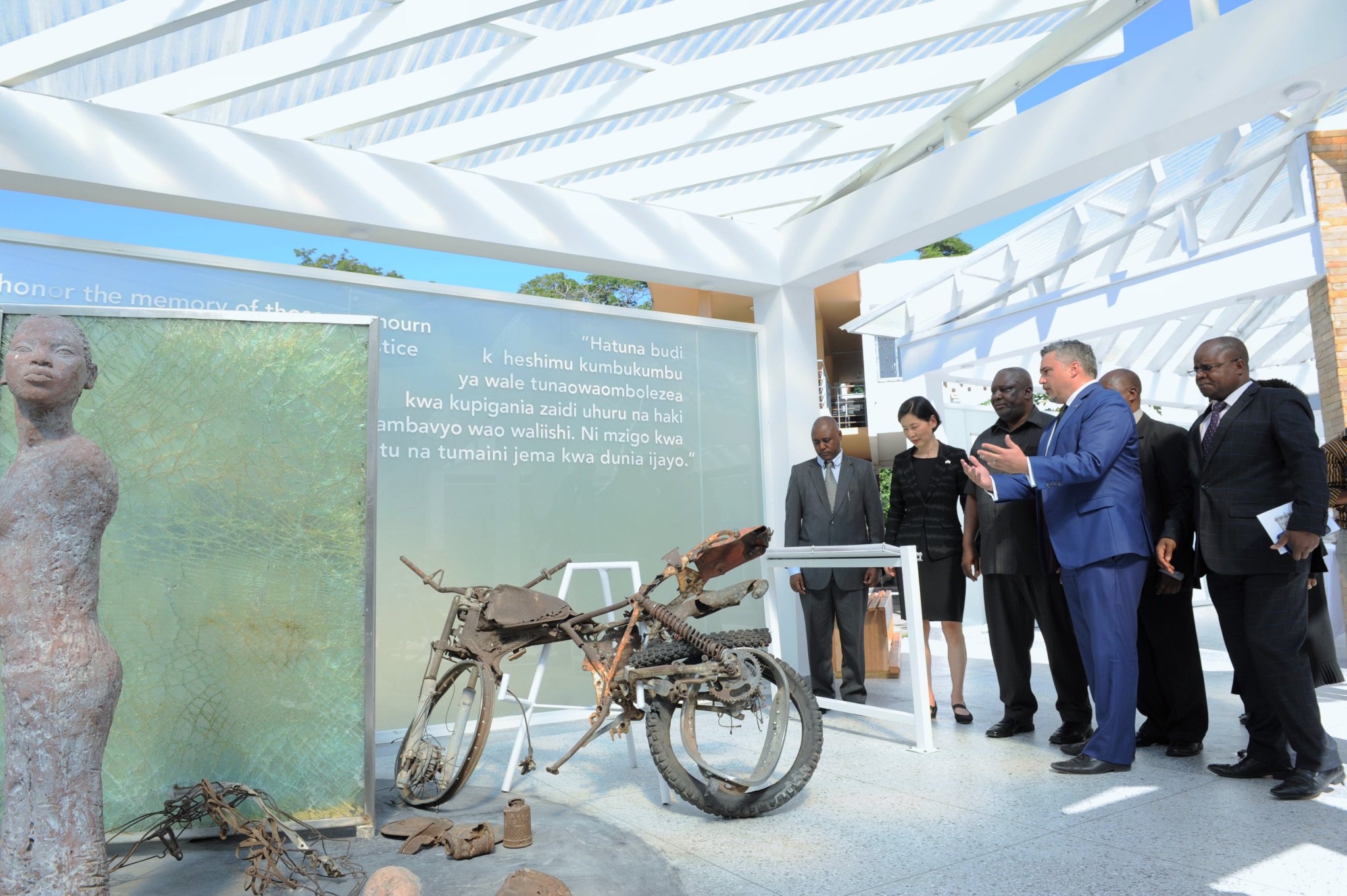
Jeffrey Ladenson

Jeffrey’s work as a Cultural Affairs Officer transformed U.S. public diplomacy efforts in Tanzania and created a lasting positive impact. By cultivating a strong network of contacts, Jeff partnered with local organizations to host meaningful programming, such as the first-ever Tanzanian girls entrepreneurship summit for young female innovators. Jeffrey’s work demonstrates a deep compassion for and knowledge of Tanzanian culture and history through which he has created programming that is relevant to the unique interests of the Tanzanian people and advances U.S. cultural diplomacy in Tanzania.

Robert Chandler & Elizabeth Chandler

The 2019 award went to Robert and Elizabeth Chandler for their translation from the Russian of Vasily Grossman’s Stalingrad. Set in Russia in the midst of WWII, the novel follows the Shaposhnikov family as they grapple with the nearing German invasion, providing an intimate portrait of humanity in the face of disaster. According to the Modern Language Association, “Robert Chandler and Elizabeth Chandler’s historical understanding and archival research made it possible to produce a book that salvages the novel from the fate of its mangled original, censored in the process of writing, editing, and production.” The Chandlers’ translation makes Grossman’s masterpiece available to English language readers for the first time.

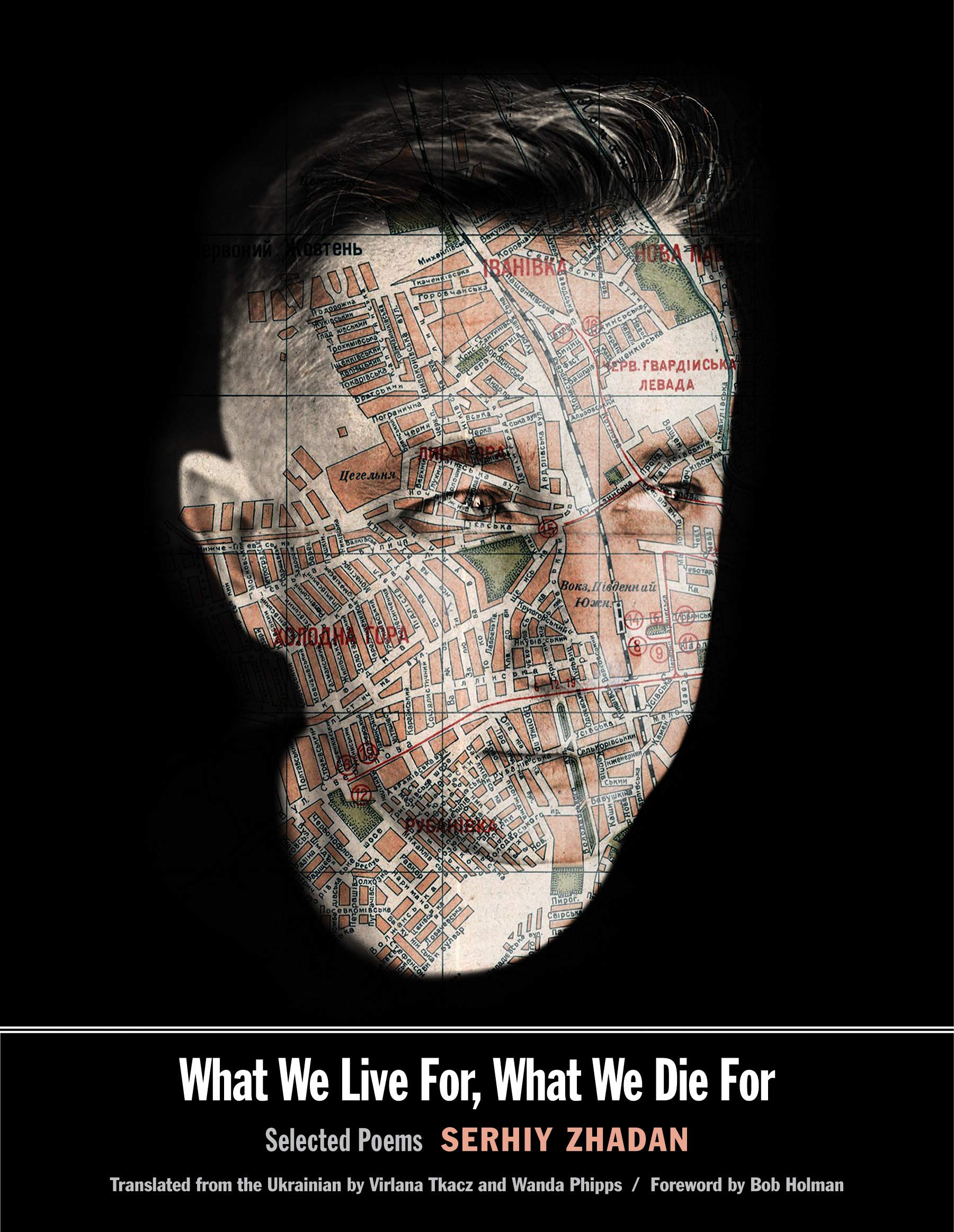
Virlana Tkacz & Wanda Phipps

Virlana Tkacz and Wanda Phipps received an honorable mention for their translation from the Ukranian of Serhiy Zhadan’s What We Live For, What We Die For: Selected Poems by Serhiy Zhadan. The collection includes selected works detailing the haunting realities of life in war-torn Ukraine from seven of Zhadan’s previous publications, released between 2001 and 2015. According to Dzvinia Orlowsky of the Solstice Literary Magazine, “These eloquent translations read as if the poems were conceived in English. Every poem transports readers to an authentic, emotional destination.” Tkacz and Phipps have been collaborating since 1989, and are codirectors of the Yara Arts Group in New York.

Yolanda Robinson

In over ten years of service as ECA’s Deputy Director and Director of Budget and Finance, Yolanda has ensured that the Department of State accomplishes its cultural diplomacy mission in the most cost-effective manner. With her all-encompassing knowledge of the Bureau’s operations, Yolanda informs important financial decisions that ensure the long-term success of ECA’s cultural and educational programs. Beyond her immense technical knowledge, she has the ability to translate policy and finances into genuine people-to-people connections. Serving as a leader and mentor to her colleagues, is what truly sets Yolanda apart and makes her indispensable to the Bureau and its mission.

Penny Egan

During her twelve-year tenure as Executive Director of the US-UK Fulbright Commission, Penny forged stronger educational links between the US and UK, gaining increased funding for American pre- and post-doctoral scholars to study at the top research universities in the UK. She also took important steps towards making international education more accessible through her creation of the Social Mobility Program, which provides funding for underprivileged UK undergraduates to attend American universities. Penny’s dedication to cultural and educational diplomacy has provided opportunities for hundreds of students to enrich their educational experience, and in doing so has fostered continued cultural exchange between the US and UK.

*The Prix Coindreau Prize, The Jeanne Varnay Pleasants Prize for Language Teaching, and the CASVA-Henry & Judith Millon Award are currently inactive.