This year’s award went to University of Texas professor Lynn R. Wilkinson to support final research for her book on Danish writer and cultural figure Emma Gad. Complementing Lynn’s earlier works on Anne Charlotte Leffler, a nineteenth century Swedish playwright, this book on Emma Gad will explore the writer’s role as a dramatist, journalist, hostess, and pioneering feminist in Denmark at the turn of the twentieth century. Despite Gad’s enormous success during her time, her works are not as widely read today. Wilkinson hopes to bring attention to this often overlooked historical figure and demonstrate the importance of female cultural influencers in Scandinavia during the nineteenth and early twentieth centuries.
This year’s Winks Award went to Patricia Tupou, who is pursuing a Master’s degree in Pacific Islands Studies at the University of Hawai’i at Manoa. As a member of the Tongan community, Patricia is interested in how Indigenous narratives about the environment shape discourse about climate change and influence resource management and sovereignty movements. She believes that including indigenous perspectives in the global conversation about climate change will help facilitate the implementation of meaningful political action. Funds from the Roth Foundation will help Patricia travel between the eight islands that make up Hawai’i, allowing her to conduct field research with a diverse range of Indigenous communities and better understand broader regional narratives about the environment. Her future plans include entering politics as an advocate for the Pacific diaspora community in New Zealand and as a proponent for more effective climate change policies.
Solveig Mebust, of the University of Michigan, is conducting doctoral research on the role of women in music activism during the nineteenth century, an important topic, as female contributions to the production of music are often overlooked. One of the main subjects of Solveig’s research is Nina Hagerup Grieg, the wife of composer Edvard Grieg and a talented musician in her own right. Our project support is currently helping Solveig expand her research to include Gjendine Slaalien, a diary maid who inspired Edvard Grieg with traditional folk songs that he transcribed and used in his own compositions, and will also enable Solveig to conduct additional research on Nina Hagerup Grieg’s role as a mentor and advocate for young women musicians.
Saint Olaf College’s Nora Uhrich undertook timely research on the treatment of female refugees in Norway who have experienced sexual trauma and the role of cultural differences in how their cases are handled. She hopes to raise awareness about this vulnerable population and use her research to inform and influence legislators who work on refugee policies. Our project support helped Uhrich travel to remote asylum reception centers in Norway, where she conducted interviews with residents and employees, facilitate visits to psychological clinics that specialize in the treatment of asylum seekers and hire translators for her interviews with refugee women.
Kathleen Ernst, of the University of Tennessee, undertook research into the strengthening of climate services and social planning in Sweden. Through several case studies, she explored options for bridging the growing gap between the scientific community’s knowledge about climate change and the practical use of that information to plan for and adapt to the changing climate. Funds from the Roth Foundation allowed Ernst to attend the European Climate Adaptation Conference to learn from the European Union’s approaches to environmental issues.
The special tenth anniversary edition of the Sozopol Fiction Seminar, organized by the Elizabeth Kostova Foundation (EKF), focused on creative non-fiction writing. The Bulgarian and American writing fellows selected to participate in last year’s Sozopol Fiction Seminar were: Akwaeke Emezi, Chris Fenton, Evan James, Jaclyn Moyer, Kate Angus, Petya Nakova, Ana Blagova, Bistra Andreeva, Galina Nikolova, and Svilen Georgiev. The group met to work under the guidance of authors Philip Graham, Dimiter Kenarov, Philip Gourevitch and Marin Bodakov in Sozopol from June 8-12, 2017. Click to see more!
The second grant was awarded to Natalia Magnani who is conducting independent research on the revitalization of Skolt Sami culture through the revival of plant-based skills and knowledge. She is engaging with both young, urban indigenous populations, as well as more traditional groups to rediscover and share traditional identities and customs. Our project support grant made it possible for Natalia to travel between Lapland and Helsinki in order to investigate the role of Sami women in the ongoing political debate about Sami cultural and political autonomy.
Hannah Duncan, of Brown University, received support to attend a master’s programin education and social justice at the University of Helsinki. She hopes that learning from Finland’s equity-based approach to early childhood education will prepare her to advocate for more effective multicultural education policies after completing law school in the U.S. Funds from the Roth Foundation helped Hannah organize a conference on racism, nationalism and xenophobia in Europe in cooperation with a Fulbright-Schuman grantee based in Brussels, who contributed governmental and private-sector perspectives on refugees in the labor market. In this photo, Duncan (left) is at an event she organized, with Amiirah Salleh-Hoddin (center), of the Anti-Racist Forum Finland, and Dr. Marcia Chatelain (right).
This year’s award went to Travis Franks of Arizona State University for his dissertation comparing narratives of settler colonialism and literature in two Texas-es: the town of Texas, in Queensland Australia, and the US state of Texas. His research will explore the use of literary and musical tradition to imagine a collective identity tied to a specific place and defined against Indigenous populations. Travis will also conduct ethnographic fieldwork on settlement history with colleagues in Queensland as well as with his research partner at the Texas Heritage Museum. Supplementary funds from the Roth Foundation will help support his presentation at the international conference of the National Indigenous Research and Knowledges Network on “Race, Whiteness and Indigeneity,” featuring major scholars from the U.S. and Australia. Travis hopes that his research into the transnational links between settler nativism and anti-immigrant nativism will contribute to social justice on behalf of Indigenous, immigrant, and refugee populations.
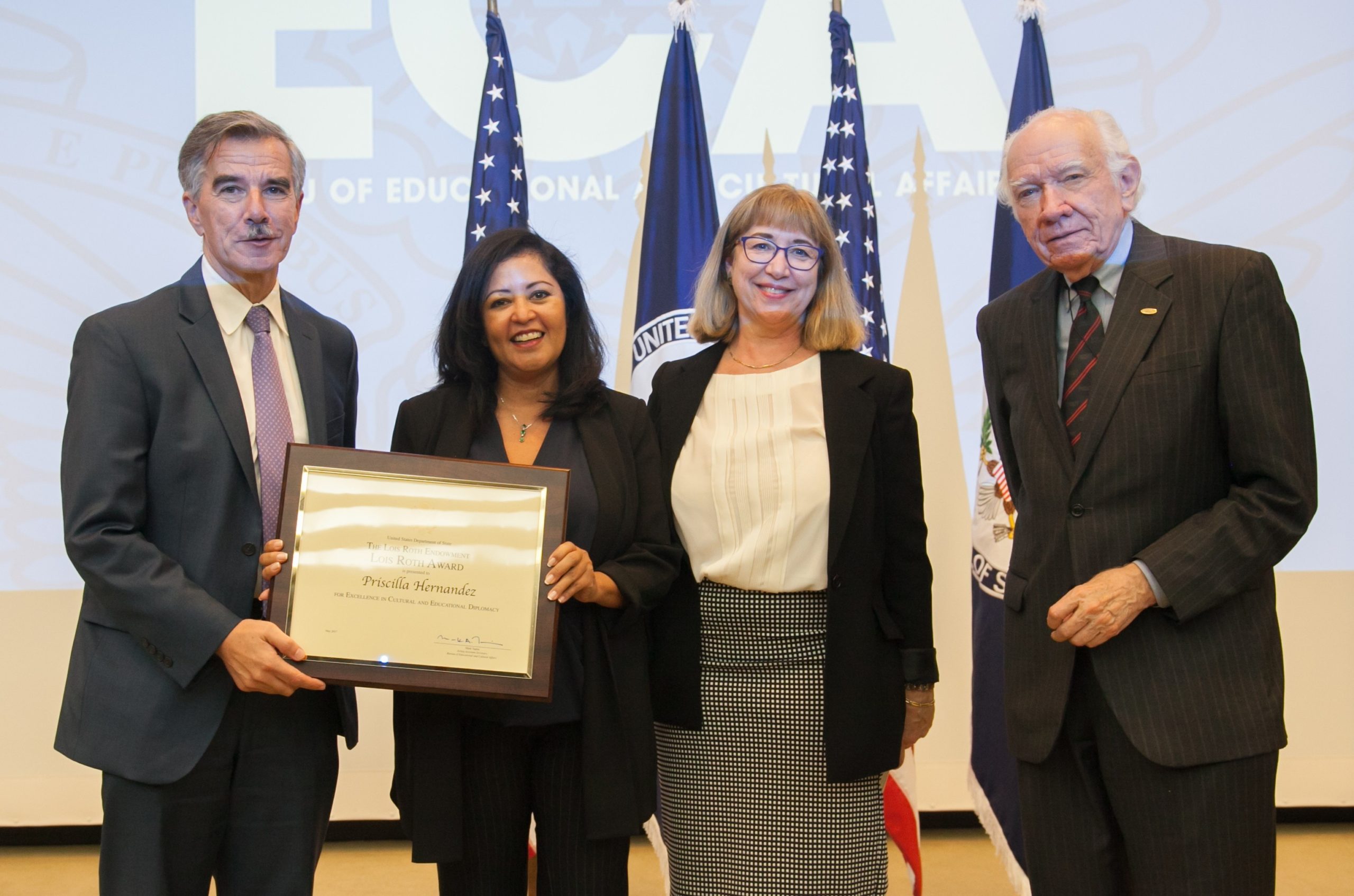
In recognition of his work as Director (Senior Advisor) for Policy, Academic Programs, ECA. David is renowned for his work ethic and intellect. He unfailingly shares his expertise and helps to educate colleagues about the values, premises and processes of ECA’s work.
The 2017 award went to Susan Bernofsky for her translation from the German of Go, Went, Gone, by Jenny Erpenbeck. Erpenbeck is the award-winning author of seven novels, five of which Bernofsky has translated into English. Erpenbeck’s moving 2015 novel Go, Went, Gone recounts the story of a former (East German) academic who befriends and becomes involved in the precarious lives of a group of African refugees in Berlin. Bernofsky, one of today’s best-known translators of German-language literature, directs the Program in Literary Translation in the MFA Writing Program at Columbia University’s School of the Arts.
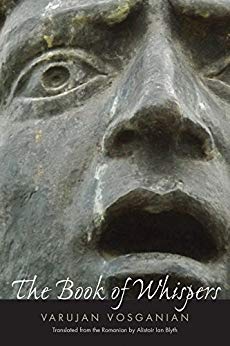
Alistair lan Blyth won an honorable mention for his translation of The Book of Whispers, by Varujan Vosganian. In this moving novel, he unfolds the experience and memory of the horrific Armenian genocide that took place a century ago in the Ottoman Empire. Originally written in 2009/12 and translated into over 20 languages, Blyth’s translation makes the book available to English-language readers for the first time.
This sixth of twelve portraits honoring alumni from thirty years of Roth Foundation programs takes a different approach, as it features the founder of one of our partner organizations, celebrating its tenth anniversary this month. Author Elizabeth Kostova, a champion of Bulgarian literature and international literary exchange, talks about the work of the foundation she started.
Author Elizabeth Kostova
Like the Roth Foundation, EKF emerged as a creative and dedicated response on the part of a few people to a wider perceived cultural need; we are very proud to have helped support its Sozopol Seminar and Dyankov Translation Award from the start. Elizabeth’s most recent novel, The Shadow Land, set in Bulgaria, was released by Random House in April.
I was first drawn to Bulgaria because I’d heard and sung some of its famous folk music and wanted to see where it came from. I arrived with a couple of college friends in November 1989, a week after the Berlin Wall fell, to do fieldwork on village singing. We took the overnight train from Belgrade to Sofia. As I woke early that morning to see the first mountains of western Bulgaria coming into view, I remember having the strange feeling that I was coming home to something. Over six months, I visited towns, villages, and city choirs, while the monolith of communism came down with a lot of shock and dust. Everywhere we went, I was moved by the beauty of the natural landscapes, the evidence of ancient civilizations crossing that patch of earth, the tragedy of Bulgaria’s recent past, and people’s kindness and hospitality.
My first novel, The Historian (2005), is partly set in Bulgaria of the 1950s; I wanted to give back something to the country that has inspired me as a writer from the proceeds. I had met many writers, translators, and publishers and was struck by the dearth of programs, awards or other forms of encouragement for those professions in Bulgaria. Despite brilliant exceptions, when I first started really paying attention it also seemed there wasn’t very much writing—other than journalism—that dealt with the communist past, which has a continued impact on society there.
Wanting to address this, the publisher Svetlozar Zhelev and I created the Elizabeth Kostova Foundation, of which I’m now only a small part. EKF has been an unprecedented success in supporting Bulgaria’s literary life—in large part thanks to our director Milena Deleva—in New York, who also oversees our US programs—and her associate Simona Ilieva, in Sofia. We’ve stuck closely to our original mission: to bring together Bulgarian literary professionals and colleagues from the Anglophone world; to create fair, competitive, juried awards and other opportunities in the field; to reward the work of outstanding translators; to establish the workshop model of discussing writing; and to get contemporary literature from Bulgaria into English and promoted worldwide.
EKF organizes three sets of programs:
—Every June, we hold our flagship program—the Sozopol Fiction Seminar—in the beautiful Black Sea coastal town of Sozopol. A global, juried competition selects five emerging writers from Bulgaria and five from the English-writing world for a week of intensive workshops and presentations. The seminar also features public lectures by distinguished writers from each language and panel discussions with pretty amazing rosters of writers, editors, translators, publishers, and critics from the US, UK, Bulgaria, and sometimes other countries as well. To celebrate its tenth anniversary this June, the seminar focused on creative nonfiction.
—With regard to translation, we sponsor the annual Krastan Dyankov Award for translation of a contemporary literary work from English into Bulgarian, an award that has become a major force in Bulgarian letters. We also cooperate with Open Letter Press to sponsor a Bulgarian translator to study publishing and editing with them in Rochester NY.
—Finally we host all kinds of readings and other events in both Bulgaria and the US. In 2015, we held Bulgaria’s first major poetry conference since the fall of the Wall. And in 2011, we brought the Nobel Prize-winning Turkish author Orhan Pamuk to speak and read in Bulgaria for the first time in his career.
Ten years in, I’m really proud on different levels. For one thing, Bulgarian literature itself seems to be opening up. Whereas ten years ago many writers were finding their way into literature through fables and magical realism, now they seem to be addressing a wider range of experiences, places, and historical subjects, and using a wider range of tone and attitude. I’m also proud to see the huge increase in the number of Bulgarian books published in English—when we began our work, there were only two or three contemporary Bulgarian literary works in print in English; now there are nearly twenty—and I’m grateful to several editors who have worked with us to host first-ever Bulgarian special issues and features.
I have also really enjoyed the many individual stories I’ve seen unfold—more than I can tell. For example, I think of the young Bulgarian professional translator who attended our annual translation workshop in Sofia and decided to try translating fiction for the first time. Thanks to her hard work, she won one of our translation residencies in the U.S. and then a Dyankov Award—a truly impressive trajectory! And I think of four or five young Americans who had never been to Bulgaria until attending the Sozopol Seminar… and subsequently returned with Fulbrights or other teaching jobs in the region. Most importantly, I think I can say without risk or immodesty that EKF has been crucial for many people in their decision to pursue writing or translation as a profession.
The 2017 Sozopol Fiction Seminar participants enjoy a break between activities.
——————————————————–
This text blends excerpts from an interview with Elizabeth Kostova conducted by Jessie Chaffee for Words Without Borders; you can read it here. Thanks to Drew Barnhart, our Media and Outreach Manager, for producing our June Portrait.
Professor Michael Ignatieff of Central European University gave the sixth annual Fulbright Distinguished Lecture on June 10, 2016. His lecture, titled “The European Refugee Crisis: What is to be Done,” highlights a gap in understanding of the refugee crisis by international relations scholars and practical political discourse, and the vulnerability of asylum rights due to this gap. He further discusses the drivers of migration and plans for human refugee policy in Europe. View his full lecture online at the University of Oxford’s Website.
Michael Ignatieff is a distinguished professor, award-winning author, and former leader of the Liberal Party of Canada and the Party of Official Opposition within the Parliament of Canada. He has served as a professor at Harvard Kennedy School (2013), the University of Toronto (2012-2013), Centennial Chair for the Carnegie Council for Ethics in International Affairs (2012-2015), and Edward R. Murrow Chair of Press, Politics and Public Policy at Harvard Kennedy School (2014-2016) prior to becoming President and Rector of Central European University. Ignatieff has also written on economic, political and historical topics as a contributing writer for The New York Times and Editorial Columnist for The Observer.
Fellows: Ben Bush, Charlotte Crowe, Christina Nichol, Dimana Trankova, Inez Baranay, Joseph Horton, Martin Kostov, Svetlozar Stoyanov, Toshka Ivanova, Violeta Radkova
Bonnie Scarth spent the 2015-16 academic year working in the Anthropology Department at Cornell University, pursuing a comparative research project on the subjective meanings, lived experiences, and potential transformations of trauma among women diagnosed with post-traumatic stress disorder (PTSD) in the U.S. and New Zealand. With a background in family violence and sexual assault prevention, Scarth explored the impact of applying a medical diagnosis to someone who has experienced violence, and investigated the role of the medical and justice systems in contributing to or complicating the potential for transformation of lived experience.
This eleventh of twelve portraits in 2017, honoring alumni from thirty years of Roth Foundation programs, features New Zealand medical anthropologist Bonnie Scarth, currently wrapping up her dissertation at the University of Otago. In 2015-16, a Robin and April Winks Award from the Roth Foundation helped her cover expenses for a year at Cornell University, where she added a cross-cultural dimension to her research on the personal and policy repercussions for trauma survivors.
When I started my university studies, I was in my early 20s and had two young children. I was fortunate to get interesting part-time jobs, most often short-term contracts that would fit around parenting and studies. In these jobs, I dealt with a wide variety of issues, from interviewing cancer patients, to promoting sexualhealth, and coordinating family violence prevention. The research for my dissertation—Perceptions of Suffering and Suicide: Implications for Policy and Practice—grew out of many of these experiences, and then evolved further during my fieldwork, as happens with ethnography, given its open-ended, interactive methods. Launching into my year at Cornell, I was very grateful to receive the Roth Foundation’s Winks Award, which allowed me to buy me some excellent ethnographic methods books and other useful fieldwork tools.
As participant-observation, in Ithaca I volunteered at a crisis centre, where I worked with trauma survivors, among other things. I also gathered narratives through long, rich, unstructured interviews—in which the participant takes the lead and creates their narrative as they see fit, rather than having the researcher define what is important and structure the narrative. This methodology is especially helpful with sensitive topics. Trauma and suffering were the broad focus of the interviews, as well as how these experiences were integrated into people’s lives and the lives of those around them. The process of medicalization can be disempowering, as many medical anthropologists have noted; it’s important to remember that trauma survivors also have agency and make meaning from their experience on their own terms.
The concept of validating mental suffering was raised in a surprising way during my training at the crisis center. We were focusing on how to fight stigma, watching educational videos showing how unreasonable it would be if we treated physical ailments the way we treat mental illness. We then turned to a discussion of physician assisted suicide/euthanasia (PAS/E): did we agree that where PAS/E is available for people with non-terminal physical illness and “unbearable suffering” (the term used in the law), then by rights it should also be available for people with mental suffering (as it is in the Netherlands and Belgium)? This hugely controversial issue, which raises many questions about what “unbearable suffering” is, provided an important additional lens for understanding the concepts of suffering, medicalization, and the wish to die.
The majority of my US participants had suffered some kind of significant trauma in their life, including sexual, physical, and/or emotional abuse. Ten had survived suicide attempts—often multiple attempts—since a young age. The majority had experienced suicidal ideation at least once, but for many it was an ongoing issue, and several participants had also suffered a close bereavement by suicide. A couple of participants were key informants who worked in suicide prevention. NZ has the highest youth suicide rate in the OECD, despite not having such easy access to firearms as in the U.S.; so it was interesting for me to hear about successful youth suicide prevention strategies in parts of the U.S.
Bonnie with her adviser at Cornell, Vilma Santiago-Irizarry.
My New Zealand fieldwork has had a somewhat similar participant group, in terms of survivors and experts; but, building on my time in the U.S., I now include questions relating to PAS/E laws and “unbearable suffering.” As in the U.S., in NZ discrimination and stigma are still described as a significant issue with regard to mental illness, trauma, and suicidality. Medicalization is also often seen as the solution… as if medicalizing something—giving it a scientific and biological explanation—will make it “real” and legitimate.” On the contrary, the things that people cite as helping them heal from significant trauma and suicidality often fall outside of medical and mental health services. A theme that arose repeatedly in both sets of interviews was that many participants felt like their suffering was heavily discriminated against and stigmatized in a way that other forms of suffering are not and that physical illness/suffering is validated in a way that mental suffering/illness is not. As one person put it: “We need to treat this (mental illness or suicidal ideation) just like we would cancer!”
But the most important insight shared by participants is that healing is not a straightforward journey. Many participants felt frustrated that they didn’t just one day “recover” from trauma and it was over; and a number said people get frustrated with them for not just “getting over it” and “moving on.” But, as described by participants, recovery is more like a gradual unravelling and un-layering process, followed by re-building, preferably on their own terms. And this takes time. It is not safe or possible to speed it up.
Suffering is subjective, impacted not just by a person’s internal self, but by multiple unique elements surrounding the person: culture, environment, support systems available at the time, whether or not they were believed and supported, among so many other factors. Basically, survivors of trauma want to be included in the community and respected like everyone else—truly heard and validated… and then allowed to have some autonomy over what constitutes healing for them personally. This might seem obvious, but as people’s narratives show, it is not that easy to come by.
For me, it has been such a privilege to have so many people share some of the most difficult topics with me—and to work toward a better understanding of how to help people get what they need. I’m really grateful to the Lois Roth Foundation for helping me undertake this research journey.
.
This text evolved from correspondence between Bonnie Scarth and Skyler Arndt-Briggs. Thanks to Drew Barnhart, our Media and Outreach Manager, for producing our November Portrait.
Jason Bahbak Mohaghegh was awarded this prize for his translation of Born upon the Dark Spear: Selected Poems of Ahmad Shamlu (Contra Mundum Press, 2015).Known for his voice of resilient defiance and political dissent, Shamlu is one of the most prominent literary figures in twentieth century Iran, evidenced by his nomination for a Nobel Prize in Literature in 1984. While previous translations of Shamlu’s work have been limited in scope, leaving his poetry relatively unknown in the English-speaking world, Born upon the Dark Spear showcases 78 poems from throughout his career, honoring his use of poetry to respond to the political tyranny and social upheaval he observed in his country.
Mohaghegh’s translation is noteworthy both for its groundbreaking collection of poems, and its exceptional quality. Born upon the Dark Spear expertly captures the tone and spirit of Shamlu’s poetry, enabling readers to engage with it as an ever-relevant commentary on inequality, oppression and indifference.







 As participant-observation, in Ithaca I volunteered at a crisis centre, where I worked with trauma survivors, among other things. I also gathered narratives through long, rich, unstructured interviews—in which the participant takes the lead and creates their narrative as they see fit, rather than having the researcher define what is important and structure the narrative. This methodology is especially helpful with sensitive topics. Trauma and suffering were the broad focus of the interviews, as well as how these experiences were integrated into people’s lives and the lives of those around them. The process of medicalization can be disempowering, as many medical anthropologists have noted; it’s important to remember that trauma survivors also have agency and make meaning from their experience on their own terms.

