For her Fulbright project, journalist Juliana Hanle (Yale University) went to Norway to document the impact of industry on indigenous communities in Norway. Her Roth Foundation award allowed her to travel to the high arctic to report on local protests against big mining interests there. Julia continued to follow the story, and in November 2019 published her article “The Fight for the Reindeer” in the Scientific American.
Political scientist Jeffrey Ziegler (University of Wisconsin-Madison), in Sweden to study electoral and party finance reform, was based at Umea University; he used his award to travel to Stockholm to interview civil servants, collect documents and attend conferences.
Evelyn Ansel spent her Fulbright year at the Vasa Museum in Stockholm, where she brought her unique skills in museum studies, art conservation and boatbuilding to their collection of 17th-century shipbuilding tools. Her Roth Foundation award allowed her to travel to, photograph and blog about shipyards, mills and metal shops elsewhere in Europe.
Lucia Simonato (Asst. Prof. at the Scuola Normale Superiore, Pisa) was in residence for two months at the Center for Advanced Study in the Visual Arts at the National Gallery of Art. A Paul Mellon Visiting Senior Fellow at the Gallery, she explored the Italian Architectural Drawings Photograph Collection for her project on Literary Description and Visual Experience of the Vatican Palace in the Seventeenth and Eighteenth Centuries.
Economist Joseph E. Stiglitz (Columbia University) gave the fourth annual Fulbright Legacy Lecture on International Relations. His topic was the “Causes and Consequences of Growing Inequality—and what can be done about it” at Pembroke College, Oxford, and Kings College London. Stiglitz is a recipient of the Nobel Memorial Prize in Economic Sciences (2001) and the John Bates Clark Medal (1979) and a former senior vice president and chief economist of the World Bank.
Historian Emma Rothschild spoke on the mid-twentieth century history of internationalism at the University of Edinburgh. Rothschild is the Jeremy and Jane Knowles Professor of History at Harvard and the director of the Joint Center for History and Economics at Harvard and Magdalene College, Cambridge. Her lecture took place on 21 May 2014 at Edinburgh University, where she received an honorary doctorate in 2013.
The second Gill Jacot-Guillarmod Award went to Dominique Benbrahim for her work at the US Embassy in Rabat, Morocco since 1983. Over the years, she has initiated and facilitated many programs, including several on women and technology, the national tour of a theater troupe addressing corruption, and the creation of the Moroccan-American Friendship Foundation, a nation-wide association of exchange program alumni, to help them maintain contact with the U.S. and each other after their return.
In recognition of her work in the Czech Republic. Keneson-Hall’s approach connects an astounding range of people and venues: from Pilsen to Prague, from a police force to the Republic’s most famous artist, with visitors from Bill Murray to Wes Anderson, and from those seeking contact with America in person to those who live online. A long list of accomplishments conveys her exceptionally creative, bold, accessible and energetic approach to cultural and educational exchange.
For his volume entitled Hafez: Translations and Interpretations of the Ghazals (Miami Univ. Press). In this volume Squires, who is an accomplished Irish poet and lived in Iran for three years, captures the energy and depth of the iconic poet Hafez in contemporary English without archaisms or a predetermined interpretation. It displays a supple and at times even exhilarating handling of language and form.
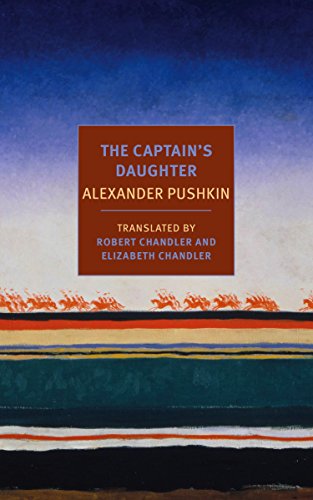
Robert Chandler and Elizabeth Chandler received recognition for their translation of The Captain’s Daughter, by Alexander Pushkin (New York Book Review Books, 2014).
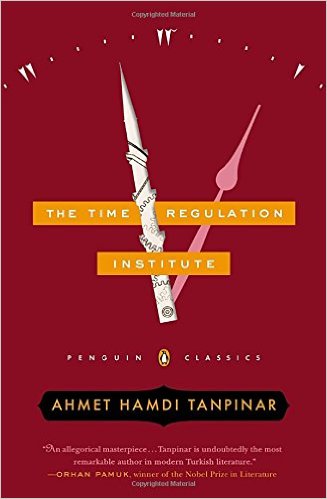
Maureen Freely and Alexander Dawes won the MLA-Roth Award for their spectacular translation of The Time Regulation Institute (Penguin, 2014), by Ahmet Hamdi Tanpinar, which describes the misadventures of the antihero Hayri Irdal, as tradition meets modernity in early 20th-century Turkey. In the words of Nobel Laureate Orhan Pamuk, “Ahmet Hamdi Tanpinar is undoubtedly the most remarkable author in modern Turkish literature. With The Time Regulation Institute, this great writer has created an allegorical masterpiece, which makes Turkey’s attempts to westernize and its delayed modernity understandable in all its human ramifications.”
In recognition of her work as the longest serving public diplomacy officer in Pakistan in over ten years. In particular, Fendrick showed courage and commitment in carrying out programs, in the utility of her proposals, and in her leadership of staff, originality and energy, decisiveness, and positive outlook and can-do attitude.
In recognition of how, in the face of budget cuts and security threats in northeastern Mexico, Beale used grace, energy and ingenuity in nurturing an imaginative program that deepened U.S. ties to local communities and upheld a positive image of the consulate as a community participant.
The Winks Award winner for 2013 was Ani Alana Kainamu, who proposed to compare the natural resource management of customary fisheries in New Zealand and Hawaii. She planned to assess contaminant levels of trace metals and microbiological elements in ecologically significant and culturally important species of fish in two key estuaries. Her methodology integrates scientific and cultural approaches to understand how anthropogenic inputs and environmental factors affect the quality of food resources. In particular, she refers to the holistic “mountain to sea” traditions of the Ngai Tahu tribe of New Zealand’s South Island and of the native Hawaiian Kanaka Maoli to inform her analytic approach. Kainamu’s study will thus contribute to both national resource management in the Pacific, and current studies of indigenous Pacific peoples.
This fifth of twelve portraits in 2017, honoring alumni from thirty years of Roth Foundation programs, features Ani Kainamu Murchie. Ani received the Robin and Avril Winks Award in 2013; unlike our other Project Support awards, which go to Americans going overseas, this one goes to a New Zealand Fulbrighter coming to study and/or do research in the United States. In her portrait, Ani explains the cultural roots of her ecological work.
To introduce myself, I am from Aotearoa New Zealand and I was educated in “kura Māori”—which is schooling taught in the Māori language. Māori are the Indigenous people of Aotearoa; this type of schooling was established by the leadership of parents and grandparents to revitalise our culture. Attending both kura Māori and English schooling gave me insight into multiple ways of knowing—that is, into both Indigenous knowledge and Western knowledge.
I have been interested in natural systems since I was a kid, as our diverse environment shapes our culture. My dissertation research at the University of Canterbury and Hawai`i Pacific University focussed on the sociocultural- and science-based values and indicators of estuarine shellfish in NZ and Hawai`i. The study looked at food safety, shellfish health, shellfish population abundance (and changes), land-use, and management effectiveness. Shellfish are utilised across the world as scientific indicators of environmental condition. Indigenous and Traditional ecological knowledge inherently involves indicators of environmental conditions, which have guided sustainable management of natural resources. Both knowledge systems are important and guide management best when utilised in parallel with each other, so it is important to address and protect both sociocultural and ecological values in legislation.
In developing my project, I was guided by the indigenous environmental philosophies ki uta ki tai and ma uka ma kai, meaning “mountain to sea,” in Māori and Kanaka Maoli, respectively. This is a holistic concept of environmental management that includes an integrated ecosystem approach, and challenges our contemporary compartmentalised approach. An example of this approach is the aquatic fisheries systems (loko i`a/fishpond) on O`ahu Island, Hawai`i. These systems were designed by Kanaka to work with the environment by enhancing brackish conditions for herbivorous fish and shellfish. They are fundamentally part of the ma uka ma kai integrated ecological system—from the streams upland, to the terraced wetlands, to the loko i`a, and then the coast and sea.
The support I received from the Lois Roth Foundation enabled me to assess trace metal contamination—a very important indicator of environmental health. Shellfish in waterways are active filter-feeders, providing sediment stability, food for people and other organisms (such as birds), and cultural-ecological interaction. Trace metals can negatively impact shellfish species and hence also disrupt the important ecosystem services they provide within brackish estuary systems. My study showed that in watersheds using more natural land-use and practices, the shellfish were “healthy” and safe to consume.
I completed my doctorate last month and am very excited to have been awarded a post-doctoral position as an Environmental Scientist in the Te Kūwaha team (National Centre of Māori Environmental Research) at New Zealand’s National Institute of Water and Atmospheric Research (NIWA). One research program I will be involved in—called “Ngā Kete o Te Wānanga: MātaurangaMāori, Science and Freshwater Management”—is investigating how to bring multiple knowledge systems together to improve our decision-making in freshwater environments. The project works at culturally-defined spatial scales—from upland streams to estuary “sinks”—to investigate how to best protect and support the socio-cultural values, uses, and opportunities associated with our waterways.
Janet Connor’s project explored how immigrant children are socialized to the complex language ideologies that exist within Norway. Unlike most other European nations, Norway has two standard written languages, each of which allows for much internal variation. Spoken Norwegian is made up of a large variety of regional dialects, and the use of a specific dialect indicates that the speaker belongs to a particular place and establishes claims to that region’s identity. The Norwegian linguistic context thus presents an unusual challenge to immigrants. In her Fulbright-funded fieldwork in an Oslo primary school—whose student body is over 95% first- or second-generation immigrant—Connor examined how immigrant communities recognize and align themselves with cultural values that are attached to specific dialects. Roth Foundation project support enabled Connor to perform a comparative study in Steinkjer, a town in Trøndelag, a region in central Norway known for its distinctive dialect. Connor’s project has already begun to receive attention both from anthropologists and non-academics.
With Roth Foundation project support, Daniel Chavez undertook a holistic study of lighting incorporating the perspectives of architecture, urban planning, public health and interior design. His research culminated in a series of design projects and presentations. Historically, architects and electrical engineers have treated lighting as a secondary consideration. In recent years, however, a dozen lighting design programs have been founded, internationally, to develop lighting designers’ visual literacy and practical knowledge of lighting fixtures and designs. As a relatively new and growing field, it offers opportunities for fascinating cross-cultural comparison and study—an opportunity that Chavez takes full advantage of.
While working on prostitution issues with other activists in the U.S., Anne Mathieson learned of an anti-prostitution policy being pioneered in Sweden, which modeled new international standards by: a) decriminalizing the activities of individuals selling sexual services, and b) criminalizing the activities of those purchasing sexual services or living off the earnings of prostituted persons. Studies show that the Swedish model has successfully reduced the number of individuals prostituted and trafficked in Sweden, as well as the number of buyers of sexual services. Her Roth-Thompson awaedenabling Mathieson to put her research in Sweden into an international perspective, to determine if and how core elements of this model could be successfully introduced to the U.S.
A Cultural Specialist at the Embassy in Ashgabat, Turkmenistan, Meredova uses cultural and educational programs to inspire people to reach higher levels of dedication to mutual understanding and service. She also heads of a committee liaising between Embassy leadership and local staff – similar to the kind of professional advocacy work that Lois Roth did on behalf of fellow employees.






 This fifth of twelve portraits in 2017, honoring alumni from thirty years of Roth Foundation programs, features Ani Kainamu Murchie. Ani received the Robin and Avril Winks Award in 2013; unlike our other Project Support awards, which go to Americans going overseas, this one goes to a New Zealand Fulbrighter coming to study and/or do research in the United States. In her portrait, Ani explains the cultural roots of her ecological work.
 I have been interested in natural systems since I was a kid, as our diverse environment shapes our culture. My dissertation research at the University of Canterbury and Hawai`i Pacific University focussed on the sociocultural- and science-based values and indicators of estuarine shellfish in NZ and Hawai`i. The study looked at food safety, shellfish health, shellfish population abundance (and changes), land-use, and management effectiveness. Shellfish are utilised across the world as scientific indicators of environmental condition. Indigenous and Traditional ecological knowledge inherently involves indicators of environmental conditions, which have guided sustainable management of natural resources. Both knowledge systems are important and guide management best when utilised in parallel with each other, so it is important to address and protect both sociocultural and ecological values in legislation.
 The support I received from the Lois Roth Foundation enabled me to assess trace metal contamination—a very important indicator of environmental health. Shellfish in waterways are active filter-feeders, providing sediment stability, food for people and other organisms (such as birds), and cultural-ecological interaction. Trace metals can negatively impact shellfish species and hence also disrupt the important ecosystem services they provide within brackish estuary systems. My study showed that in watersheds using more natural land-use and practices, the shellfish were “healthy” and safe to consume.
