In recognition of her work as the liaison between the U.S. State Department’s Bureau of African Affairs and Bureau of Educational and Cultural Affairs.
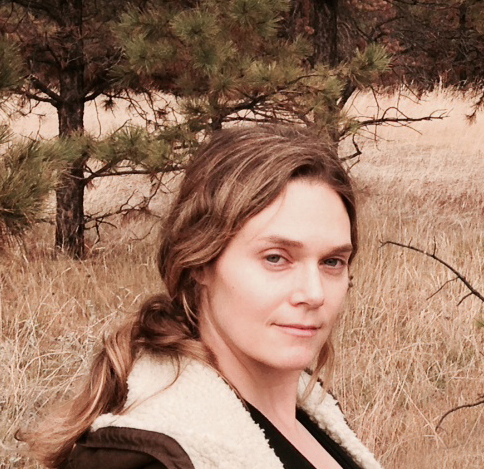
This second of twelve portraits in 2017, honoring alumni from thirty years of Roth Foundation programs, features photographer Erika Larsen. You can see Erika’s amazing work at www.erikalarsenphoto.com.
Erika won a Project Support Award while she was a Fulbrighter in Sweden in 2010, working on a photography project on the social world of reindeer herding among the Sámi people of northern Scandinavia. Her Roth Foundation award helped her take advantage of a series of opportunities to share her work: in the magazine D2; in an experimental media exhibit in Moscow; at Stockholm’s Ethnographic Museum, Jokkmokk’s Ajtte Museum and the Gällivare Museum; and in a solo exhibition at Galleri Kontrast. This project culminated in a photo essay in National Geographic (Nov 2011) and a monograph entitled Sami, Walking with Reindeer (2013).
This month, Erika wrote us some thoughts on her work and the importance of our award:
“I have always been motivated and inspired by visual language as a storytelling component. I strive continually to understand and challenge myself in the execution of that language and my intentions as a storyteller. I undertook a BFA in Photographic Illustration and an MFA in Computer Graphics and Film/Video at the Rochester Institute of Technology. In terms of training, however, I believe the most influential and formative elements have always come from my life experiences. In this spirit, I have extended my education by studying language development in Norway and Peru.
“In 2010, the Roth Foundation gave me the financial support I needed to expand parts of my project into exhibitions. This is integral and crucial to the creation process… because if you don’t have the means to get your work out and circulating, you have only accomplished part of the storytelling process.
“The projects I take on—with National Geographic and otherwise—tend to come from an innate curiosity. I seek to explore our human connection to the natural world, as these are expressed through culturally unique elements, including ritual, spirituality, language, adornments and customs, and family and worldviews.
“The stories I work on pervade all aspects of my life. It is inevitable that I become a part of those stories, to varying degrees, in order to try to grasp and understand what I am learning. The themes I focus on thus enter my artistic, social and professional endeavors equally. This would be most evident in the longer stories I have worked on:
- Sami, Walking with Reindeer, an intimate look at how reindeer herders relate to the arctic landscape;
- People of the Horse, focusing on the role of the horse in modern day Native America;
- Gifts from the Tundra, about how one Yupik community on the Bering sea relates to climate change and land erosion, as it reveals voices of the past and shapes the future;
- and, most recently, Science of Belief, about the Placebo Effect—how it aides and/or hinders our healing potential as humans—and the major role that culture and customs play in the healing process.
“On a personal level, the work I do can often isolate me within the worlds I am working in, within the story context. That’s a big reason why receiving support from the Roth Foundation (and sources like it) has been so important—it reminds me that the story is reaching other audiences and it aids me tremendously in my communication process.
“In general, the support given by the Roth Foundation helps amplify unique voices and visions around the globe.”
——————————-
This alumni portrait was drafted by Roth Foundation chair, Skyler Arndt-Briggs, based on a short interview with Erika Larsen. Thanks to Drew Barnhart, our Social Media and Outreach Manager, for producing this second 2017 alumni portrait!

